Fertility & Periods

Acupuncture for Infertility and Period Pain in San Francisco

Period pain, irregular cycles and infertility call for different assessments. I work alongside your gynaecologist or fertility clinic, with clear goals for symptoms and a plan to track whether treatment helps.

Trained and practised in Beijing Fewer needles Modern acupuncture

Dr Deb Ma, PhD, LAc, OMD  ·  1640 Valencia St, San Francisco

17 years, most of them in BeijingPhD from Beijing University of Chinese Medicine, then a maternity hospital's postpartum programme: 60 percent of a caseload of 45 to 60 patients a week.
Obstetrics referred, acupuncture treatedTen of those years working with OB/GYNs, neurologists and psychologists on shared patient care.
Fewer needlesPoint selection is deliberate and minimal, and for the cold period pattern the first tool is often heat on points rather than a needle at all.

We track pain, cycle changes and sleep separately

The goal of a visit depends on what brings you in. These are the changes we can discuss and monitor.

StageWhat brings you inWhat I sort it byWhat I measure it against
The cycleFrom the first period to the last Menstrual cramps, clots, irregular periods that come early, late or not at all, breast pain and a short fuse the week before, a PCOS (polycystic ovary syndrome) diagnosis The week of the cycle the trouble sits in A pain score on day one, a symptom diary across three cycles
FertilityTrying, or in a clinic's cycle A cycle to regulate before trying, PCOS with irregular ovulation, support through an IVF cycle Whether there is a diagnosis, and whether a clinic is running the cycle Cycle regularity and ovulation timing, and the clinic's own numbers if you are in a cycle
PerimenopauseThe years around the last period Broken sleep, sweats, mood, dryness, joint pain, a cycle that is changing Whether periods are still coming A sleep diary, a symptom scale, a hot-flash count

Infertility needs a workup; acupuncture can sit alongside it

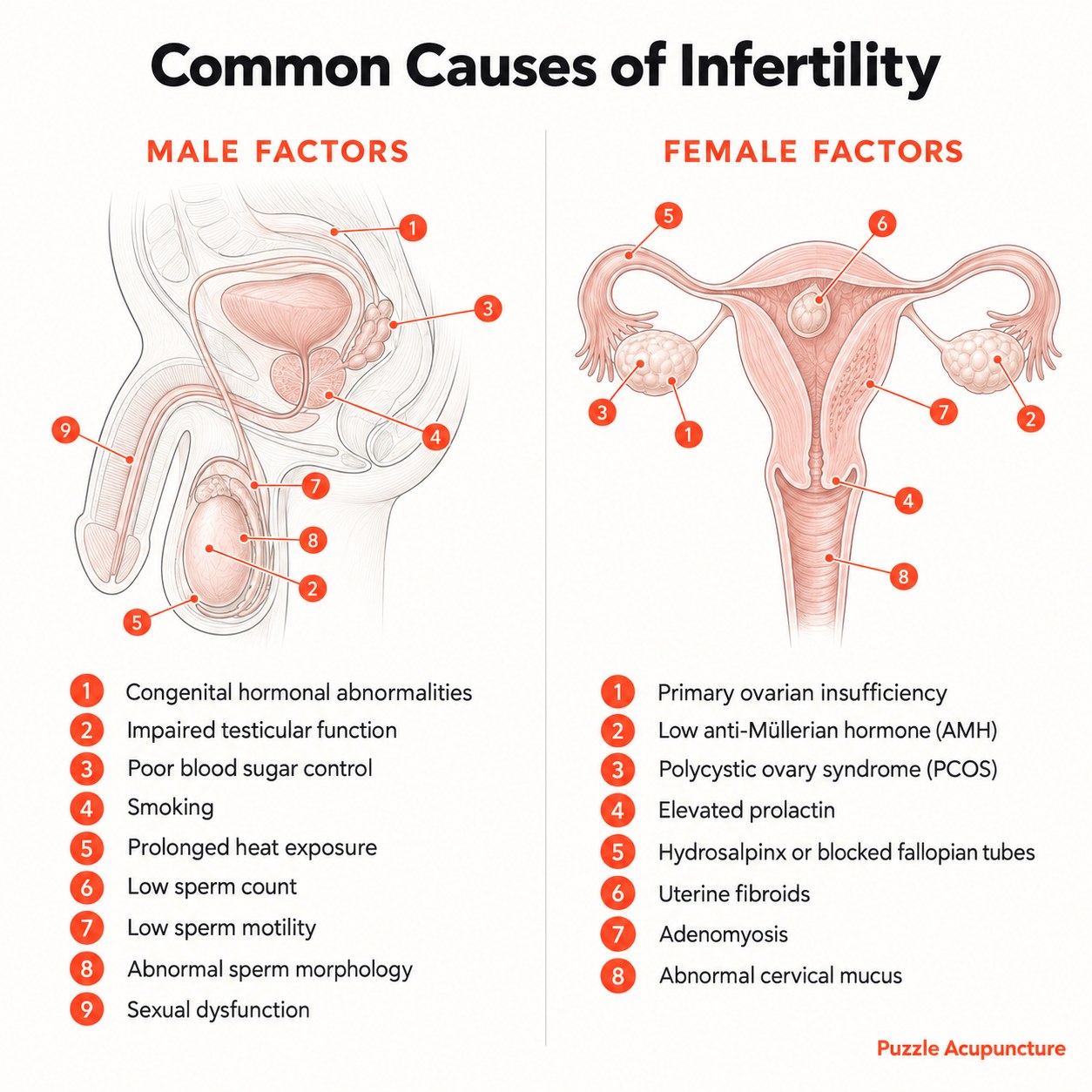
Bring your diagnosis, hormone results, semen analysis and the fertility clinic's calendar if you have them. Those findings guide the conversation about what acupuncture might add. It cannot open a blocked fallopian tube or replace fertility treatment.

Common causes of infertility, numbered on two anatomical drawings. Male factors: congenital hormonal abnormalities, impaired testicular function, poor blood sugar control, smoking, prolonged heat exposure, low sperm count, low sperm motility, abnormal sperm morphology, and sexual dysfunction. Female factors: primary ovarian insufficiency, low anti-Müllerian hormone (AMH), polycystic ovary syndrome (PCOS), elevated prolactin, hydrosalpinx or blocked fallopian tubes, uterine fibroids, adenomyosis, and abnormal cervical mucus.

Symptom improvement is different from a higher chance of live birth

In a 2017 trial of 1,000 women with PCOS, active acupuncture did not improve live-birth rates compared with control acupuncture: 21.8% versus 22.4%. A more regular cycle or feeling better during treatment does not by itself establish a fertility benefit.

My assessment also considers sleep, stress, digestion and period pain. We agree on what we are treating and how to track it, alongside the work your fertility specialist is doing.

Herbs and acupuncture must fit the fertility clinic's plan

Chinese medicine uses patterns such as qi stagnation or deficiency to guide point selection and herbal formulas. These are traditional descriptions, not measurements of egg quality, hormone levels or implantation. A herbal prescription needs to be checked against your medication and where you are in treatment.

What we discussHow it shapes care
Period pain and cycle changesWe review a symptom diary alongside any diagnosis and test results. Pain, bleeding and ovulation are separate things to track.
Sleep, stress and treatment symptomsWe agree on specific symptoms to address and check whether they change over the course.
An IVF or ovulation-induction cycleYour clinic sets the medication and procedure schedule. Any acupuncture visits or herbs must fit that plan.

The IVF schedule comes from your fertility clinic

A 2024 Chinese expert consensus on PCOS describes acupuncture beginning one cycle before embryo transfer. That is a suggested protocol for a particular setting, not a universal requirement or proof of better IVF outcomes. Bring your own schedule so we can discuss timing without changing what the clinic prescribed.

Menstrual cramps and irregular periods are treated by the week of the cycle and the pattern underneath

I ask when the pain starts, how long bleeding lasts, and whether you also have clots, spotting, breast pain, headaches or changes in mood. Bring any scan results or diagnosis, because pain associated with fibroids or endometriosis needs that context.

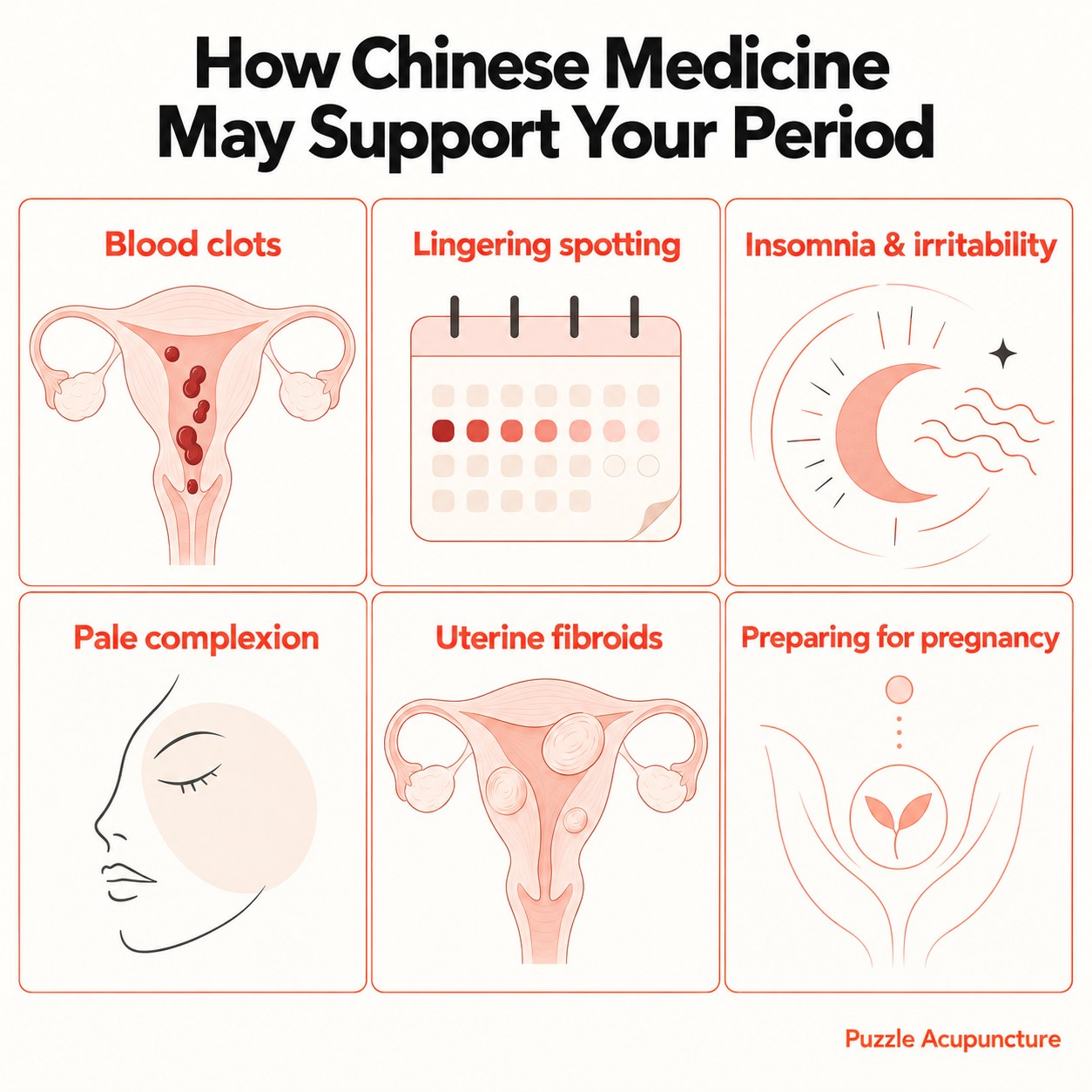
How Chinese medicine may support your period: six things it is consulted for, each with a line drawing. Blood clots, drawn as a uterus with dark clots; lingering spotting, a calendar with the bleeding days running on; insomnia and irritability, a crescent moon; pale complexion, a face in profile; uterine fibroids, a uterus with three rounded growths; and preparing for pregnancy, two hands cupping a seedling.

Use your symptoms to guide self-care, rather than fixed cycle dates

Cycles vary, and bleeding does not tell us exactly when you ovulate. Regular meals, sleep and movement matter throughout the month; you do not need a different diet for each phase.

Before your period

Note when cramps, breast tenderness, headaches or mood changes begin. A diary helps distinguish symptoms that return with the cycle from problems that persist all month.

If pain is predictable, discuss the timing of pain relief with your clinician. Keep regular sleep and activity as symptoms allow.

During bleeding

Gentle movement and a warm bath or wrapped heat pad may ease cramps. Follow your agreed medication plan and record whether pain limits work, sleep or exercise.

Severe, worsening or unusually heavy periods deserve medical assessment. Self-care should not delay finding the cause.

Between periods

Review how long the bleeding and pain lasted, and bring the record to your next visit. Report pain that continues between periods or cycles that have changed.

During fertility treatment, use your clinic's medication and procedure dates. Discuss herbs, acupuncture and home acupressure with the team, including whether pregnancy is possible.

Sources: ACOG's period-pain guidance; ACOG on tracking premenstrual symptoms; 2025 Chinese-led consensus on complementary treatment during assisted reproduction. The consensus tailors recommendations to treatment stages and acknowledges limited-quality evidence; it is not a universal home-treatment calendar.

How pain responds to warmth helps me assess the Chinese-medicine pattern

Chinese medicine groups symptoms into patterns such as cold, stagnation and deficiency. Organ names in this framework describe traditional functions; they do not diagnose disease in the kidney, spleen or liver.

I examine the abdomen and check the pulse and tongue alongside your history. The aim is to understand which symptoms occur together, not to infer hormone levels from the pulse.

What it feels likeWhat else is going onWhat it tells me
Cramps that ease with a hot water bottle, clots, a period that is late and dark Cold hands and feet, a pale face, worse after cold drinks or a cold week. Called cold with stasis in Chinese medicine; warmth is part of the treatment approach.
Cramps with bloating, breast pain and a short fuse the week before Sighing, a tight chest, the flow starts and stops, dark clots, the pain eases once the clots pass. Called qi stagnation with stasis; tension and premenstrual symptoms help guide the plan.
A dull ache rather than a cramp, worse at the end of the period or after it Exhaustion, a light flow, a pale face, dizziness on standing. Described as a deficiency pattern in Chinese medicine. Fatigue, bleeding and dizziness also need medical context.

One small trial found faster early pain relief with cheek acupuncture

A 2024 trial compared cheek acupuncture, Saridon and a placebo pill on the first day of the period. At five minutes, the cheek-acupuncture group's average pain score fell from 6.8 to 2.9 out of 10; the Saridon group's went from 6.5 to 6.4. At two hours, both treatments had reduced pain substantially.

Period pain score after cheek acupuncture, a painkiller, or a placebo

Pain on a 0 to 10 scale, mean per group, over the two hours after treatment

Cheek acupunctureSaridon tabletPlacebo pill
0 2 4 6 8 Before 5 min 30 min 2 h 0.7 0.2 5.6 0 2 4 6 8 Before 5 min 30 min 2 h 0.7 0.2 5.6

Yi Y and colleagues, Journal of Traditional Chinese Medicine 2024. One Zhejiang hospital; 90 women enrolled and 70 analysed. The treating acupuncturist scored pain, and the placebo was a pill rather than sham needling.

Symptom scores also favoured cheek acupuncture at six months. This was a small study; it does not establish that cheek acupuncture is better than painkillers generally or free of side effects.
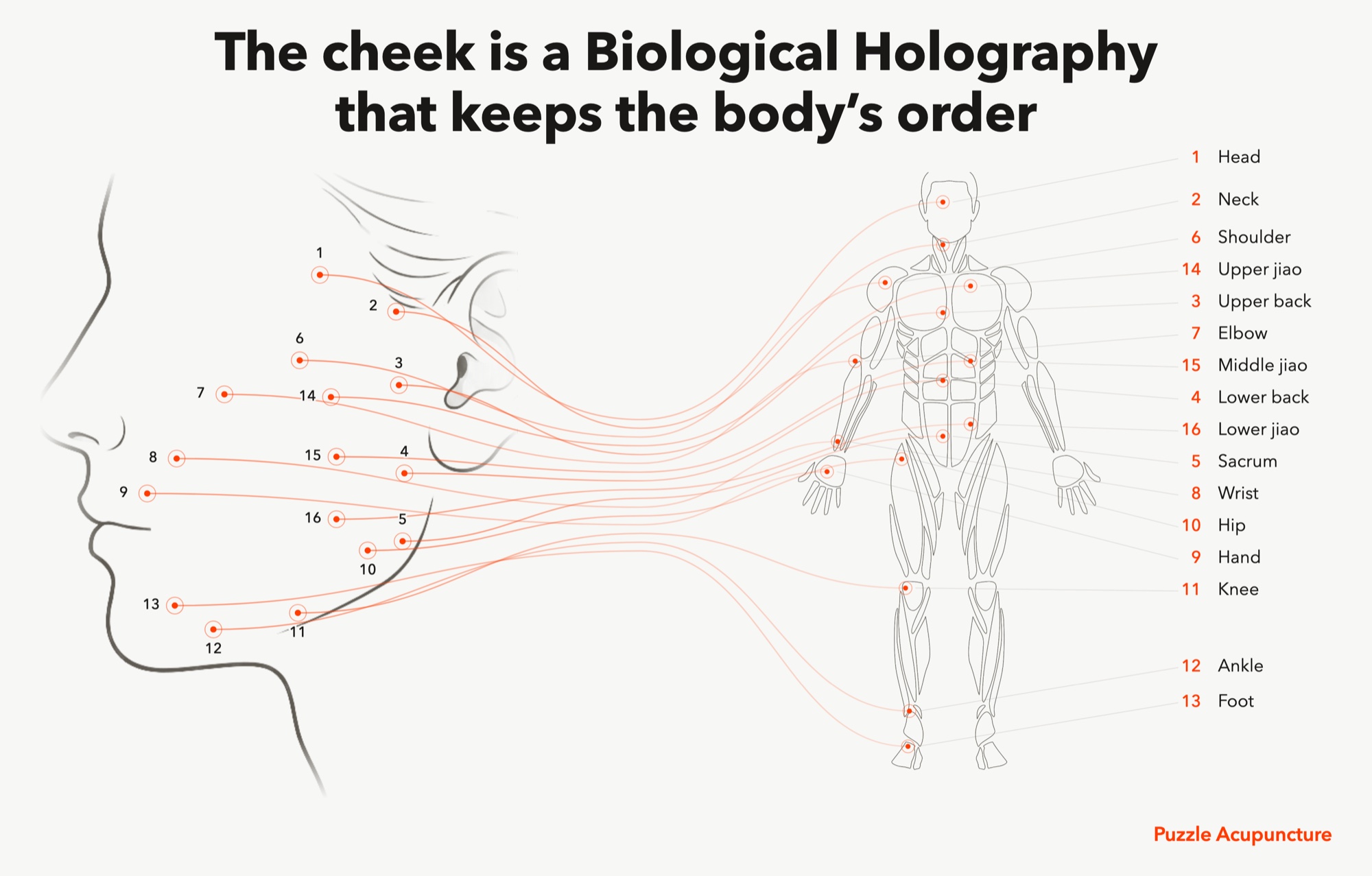
Cheek acupuncture uses facial points to treat pain elsewhere

Illustration pairing a drawn profile of a face with a drawn human body. Numbered points on the cheek are joined by fine orange lines to the region each one stands for: head, neck, shoulder, upper jiao, upper back, elbow, middle jiao, lower back, lower jiao, sacrum, wrist, hip, hand, knee, ankle and foot.

Cheek acupuncture uses a standardised map of points on each cheek, needled shallowly, a few at a time. It is not cosmetic facial acupuncture. I hold the Level 3 certificate.

For period pain, I choose points on the cheek's waist and sacrum map. This lets me treat without placing needles near the abdomen; we assess the pain response during the visit.

How cheek acupuncture works

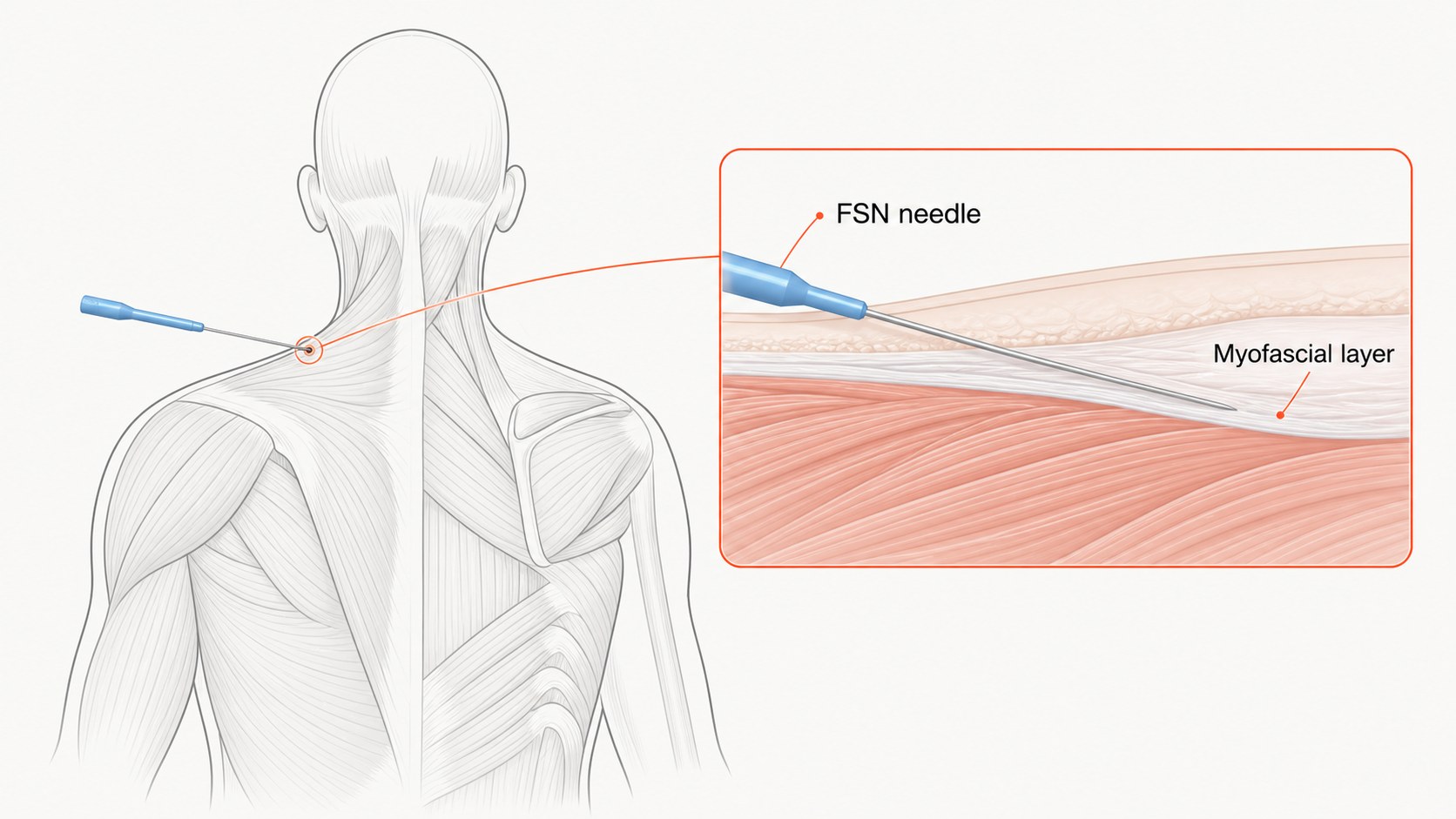
FSN needling addresses muscular low-back discomfort

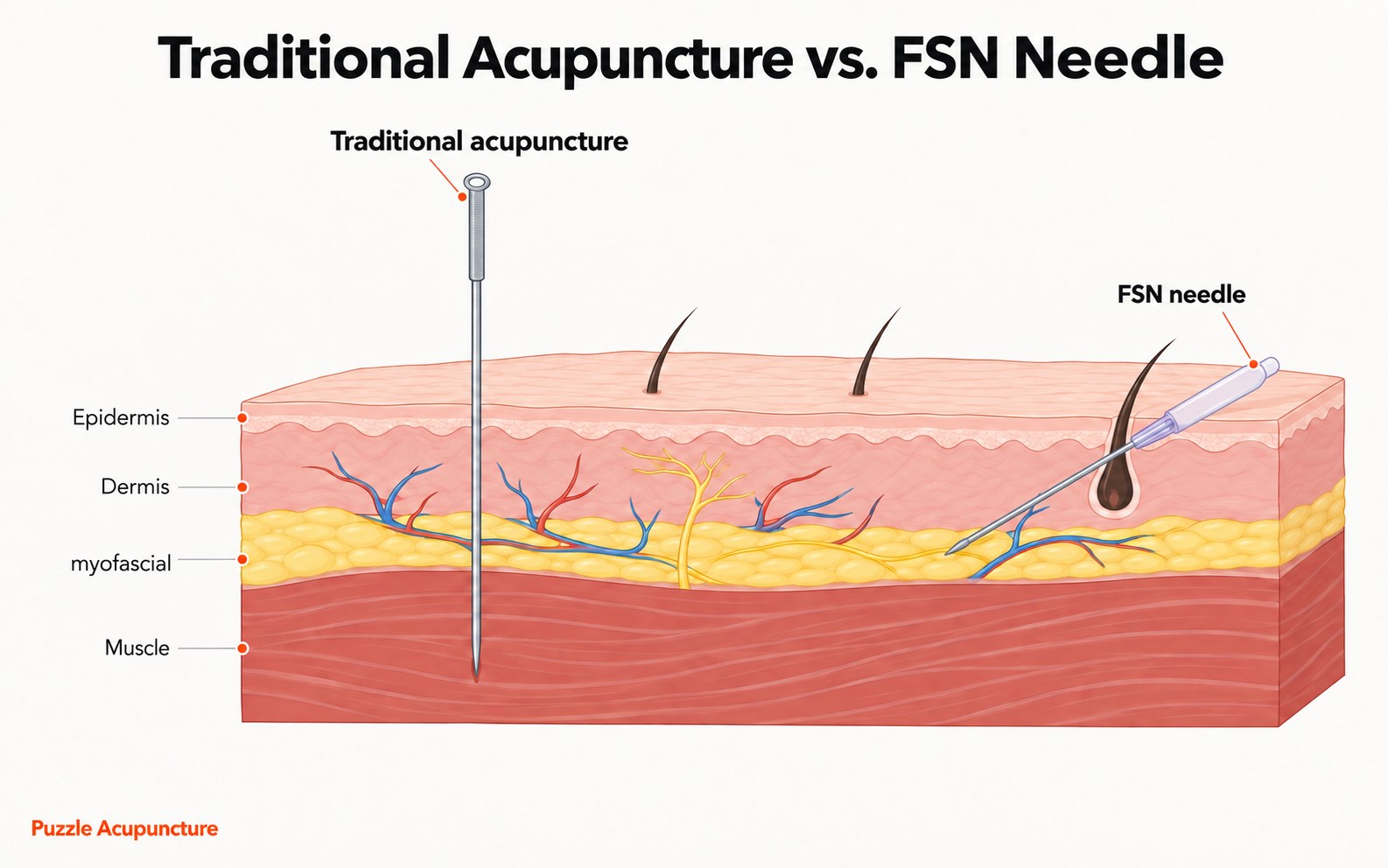
Illustration of the muscles of the upper back seen from behind, with an FSN needle entering at the top of the shoulder. An enlarged cross-section beside it shows the needle lying flat in the myofascial layer between the skin and the muscle. Cross-section of skin comparing two needles. A traditional acupuncture needle goes straight down through epidermis, dermis and myofascial layer into the muscle. The FSN needle enters at a shallow angle and stops in the layer above the muscle.
The FSN needle stays in the shallow layer above the muscle.

FSN is Fu's Subcutaneous Needling. The needle goes in at a shallow angle and stays in the loose layer under the skin, above the muscle. I sweep it gently side to side while guiding you through specific movements. I hold the FSN certificate.

I use it when the low-back discomfort accompanying a period involves a tight area of muscle. I re-test movement during the visit.

How FSN needling works

Frequently Asked Questions

Does it hurt?

Less than people expect. The needles are about the width of a human hair, and I use fewer of them than most practices. Most people describe a dull heaviness at the point rather than pain.

Do I keep taking my medication?

Yes, unless the person who prescribed it says otherwise. That includes an antidepressant, hormone therapy and ovulation drugs. I do not adjust prescriptions and nothing here is a reason to stop one. If reducing a medication is the goal, that is a conversation with your prescriber, and I am glad to write to them with what I am seeing.

I am in an IVF cycle. When should I come?

Bring your fertility clinic's calendar and medication list to the consult. We discuss whether acupuncture fits your symptoms and schedule, ideally before the treatment cycle begins. You do not need to fit a fixed acupuncture timetable, and nothing here changes your clinic's prescriptions.

Will it help my hot flashes?

A 2018 trial in 360 women found better quality of life with electroacupuncture than sham, but the improvement in menopause symptoms was smaller than the threshold considered clinically meaningful. That is not a clear promise of hot-flash relief. Discuss treatment options, including whether hormone therapy is appropriate, with your clinician.

How many needles?

The number and placement depend on your symptoms, the exam and the technique we choose. I explain the plan before we start. If needles worry you, tell me so we can discuss a gentler approach and your comfort with each step.

What does it cost?

The first consult is free. A new patient visit is $255 for 75 minutes and follow-ups are $205 for 60 minutes. Current rates are on the pricing page.

Tell me which week of the cycle it is, or where you are in the clinic's calendar

The consult is free. We go through your history, what you are taking, and whether acupuncture is a reasonable thing to add. If it isn't, I will tell you.

Related reading

Free Consult Google Map