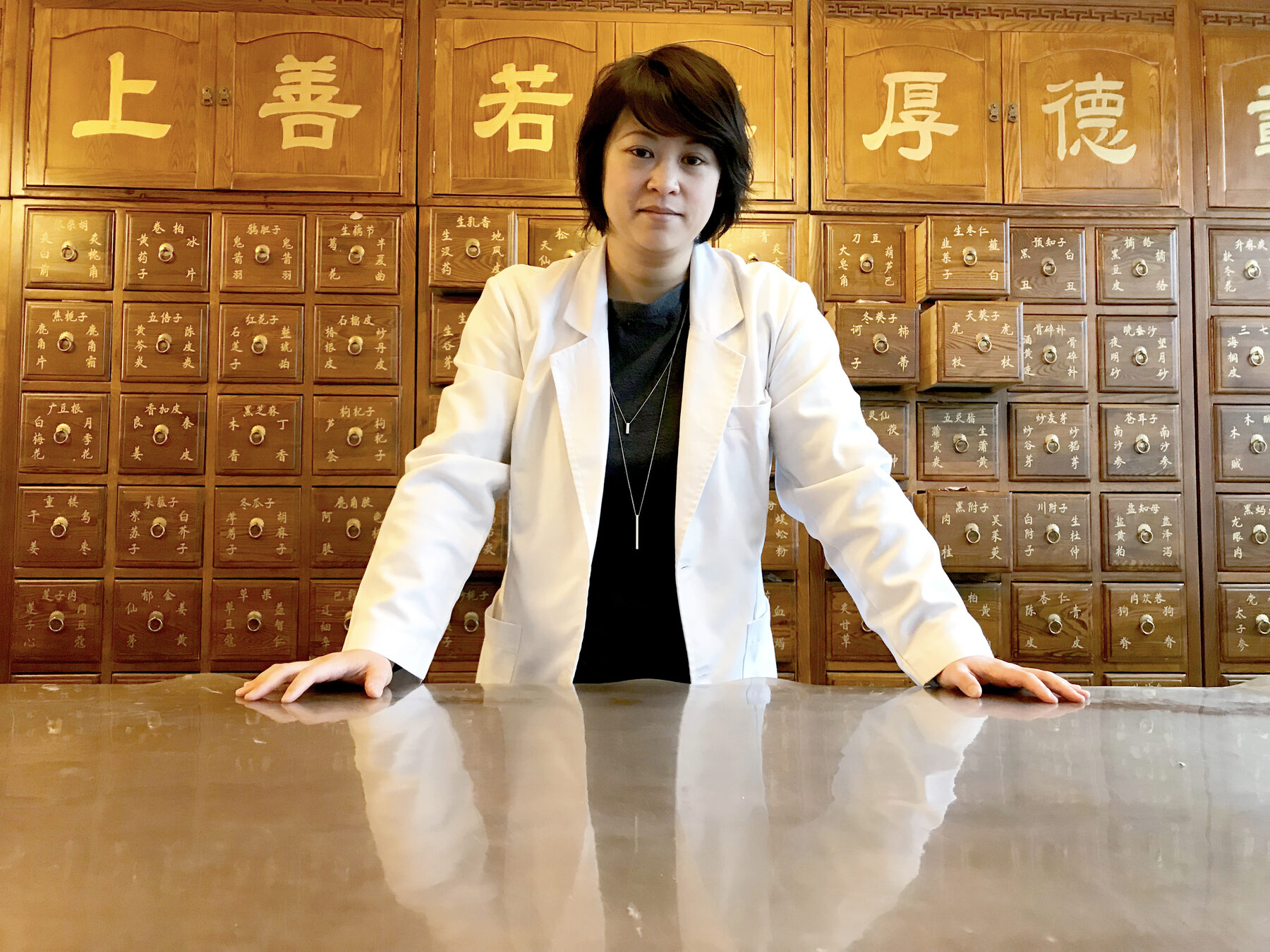
Ohio, Taiwan, European cruise ships, San Diego, Beijing's leading international hospital, and now San Francisco. I treated princesses of Qatar, celebrities, Brazilian Jiu-Jitsu athletes, and farmers in rural China. That's why I believe care should cater to your lifestyle. I take 30 minutes to examine your condition, and read your body like a puzzle instead of checking boxes. I work with modern techniques like FSN and cheek acupuncture that release pain 60% faster than traditional acupuncture.
Puzzle Acupuncture · 1640 Valencia St, San Francisco
I enjoy working cross-function with other doctors. At Beijing United Family Hospital, China's top private international hospital, I got referrals from neurology, orthopaedics, obstetrics and pediatrics with difficult cases, chronic conditions, new symptom complaints, a facial paralysis over 10 years. Acupuncture is the missing piece of the puzzle for healing.
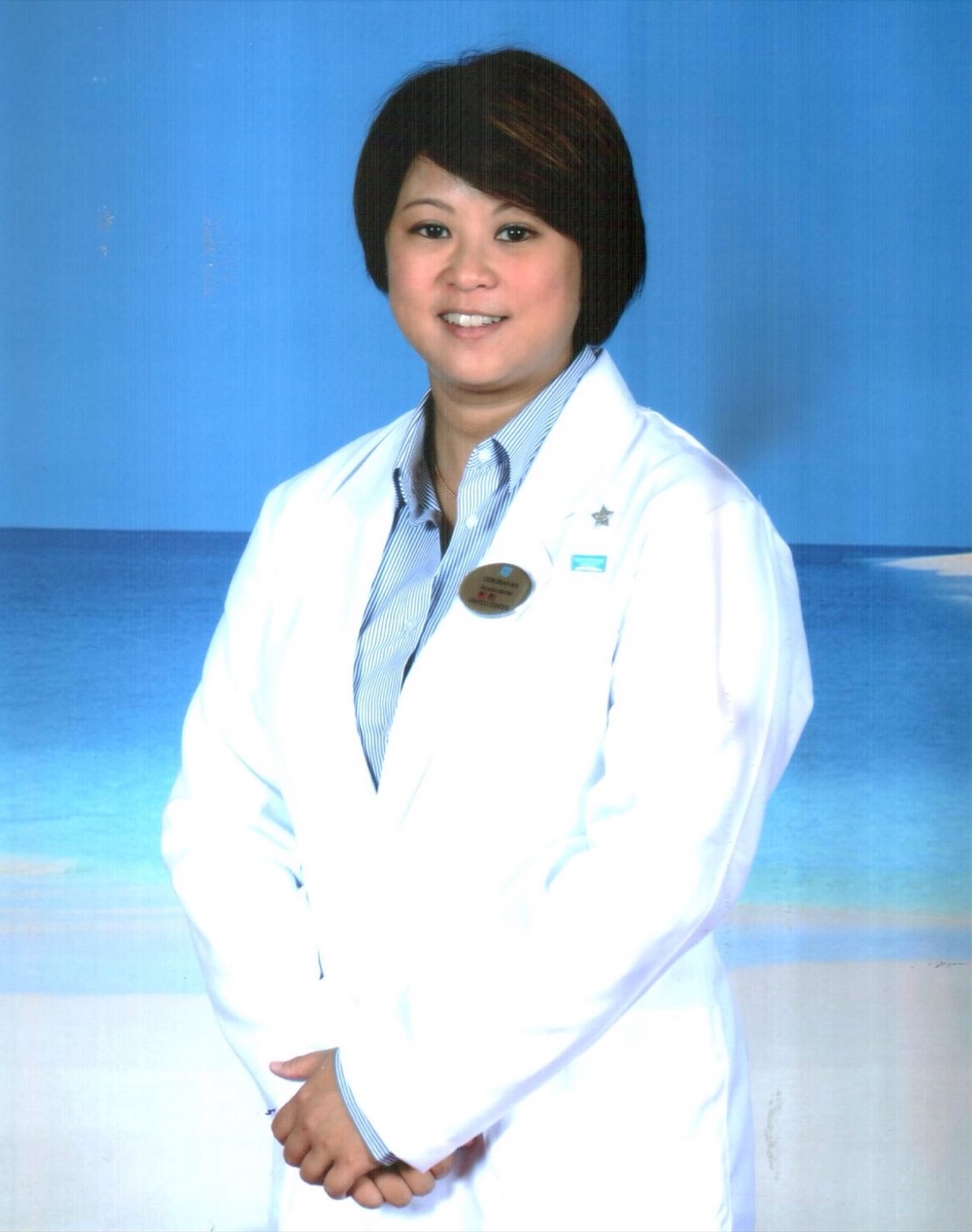
My diverse path has shaped me into something different from a typical TCM doctor. What it produced:
healing happens best when blend wisdom from different traditions with genuine understanding of each person's unique life.
Born in the United States.
Grew up there, and took a BS in Animal Science before any of the medicine.
Bachelor, Department of Chinese Medicine, Beijing University of Chinese Medicine.
MS, Acupuncture and Oriental Medicine, South Baylo University.
PhD in Medicine, back at Beijing University of Chinese Medicine.
Ship's TCM physician, Norwegian Cruise Line, across the Mediterranean Sea.
Jensin TCM Clinic, treating the city's expat community.
Her own clinic, Roots & Needles. One year in California.
Oasis International Hospital, then Beijing United Family Hospital.
Puzzle Acupuncture, 1640 Valencia Street.
Classical acupuncture is the layer under almost everything she does. The two techniques below sit on top of it, both were invented in China in the 1990s, and between them they are the reason a first session is usually shorter and lighter than people expect.
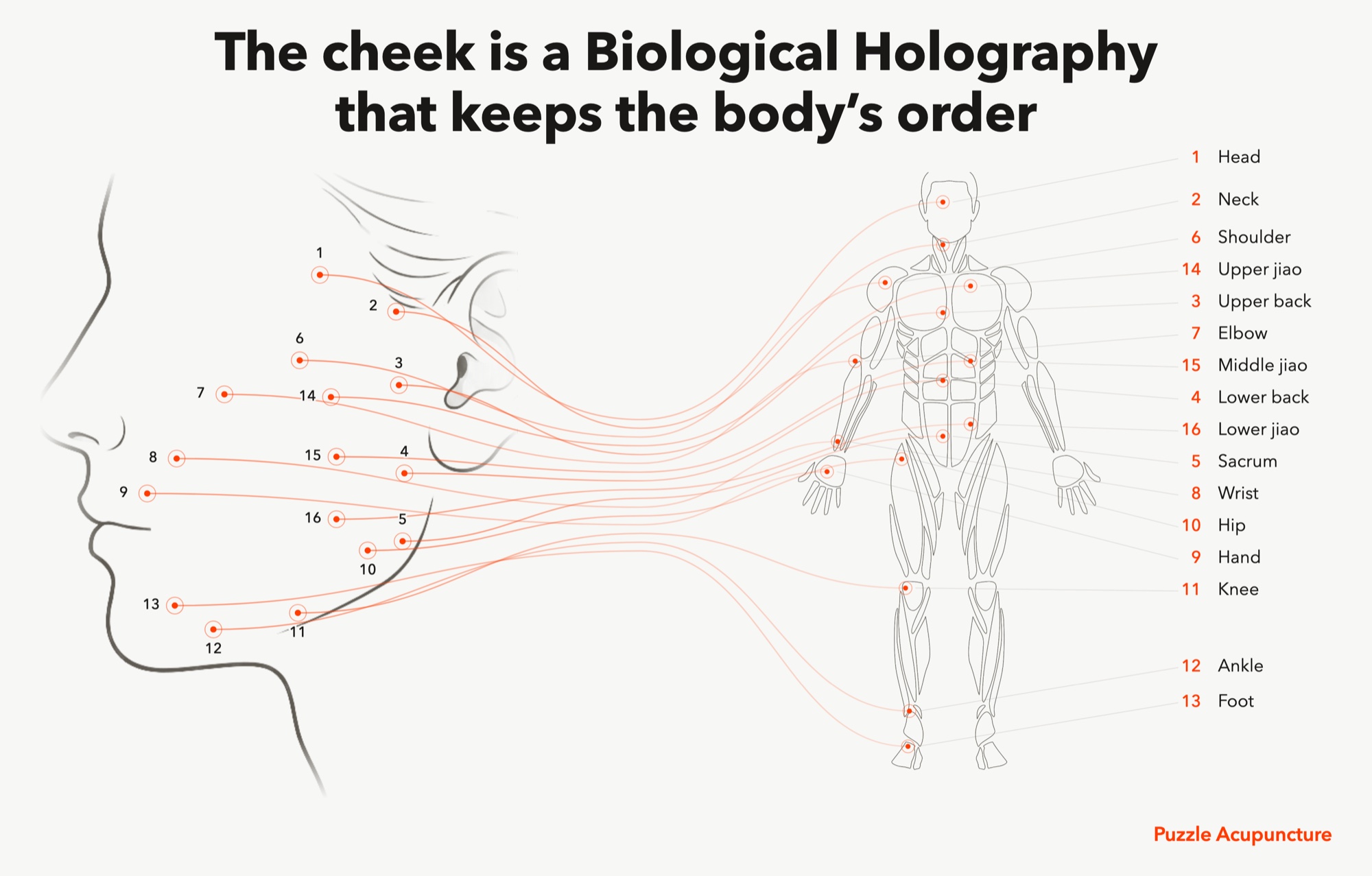
A standardised map of sixteen points on each cheek, needled shallowly, a few at a time, to treat pain elsewhere in the body. It is not cosmetic facial acupuncture and it is not what people brace for: most describe it as lighter than ordinary needling, because the needles are shallow and there are not many of them.
A 2025 systematic review and meta-analysis of 40 randomised trials in 3,009 patients reported better pain outcomes and fewer adverse reactions than the control treatments, and asked for larger, higher-quality trials. Dr Deb holds the Level 3 certificate.
50% of the pain will be gone during the 1st treatment.
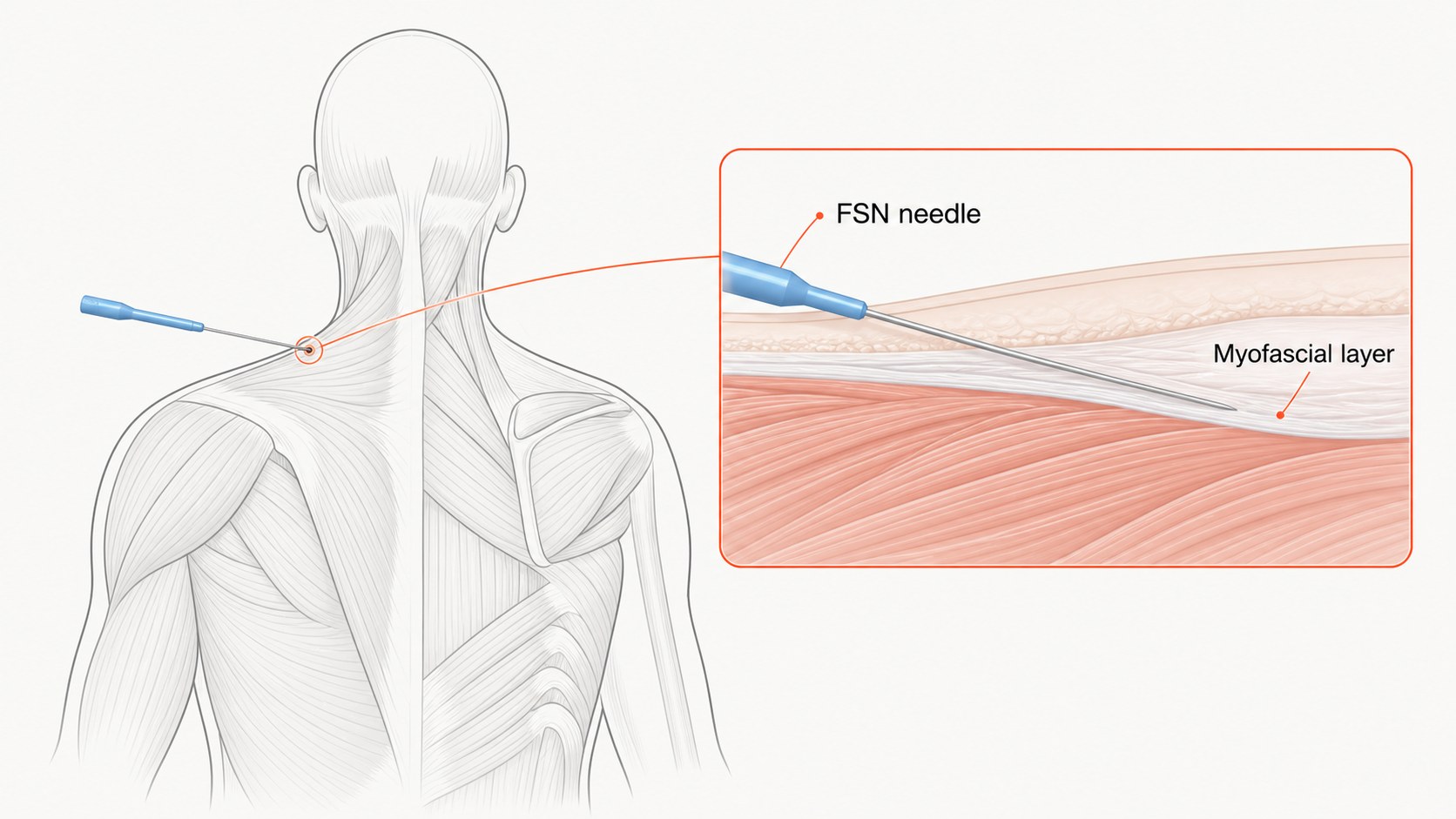
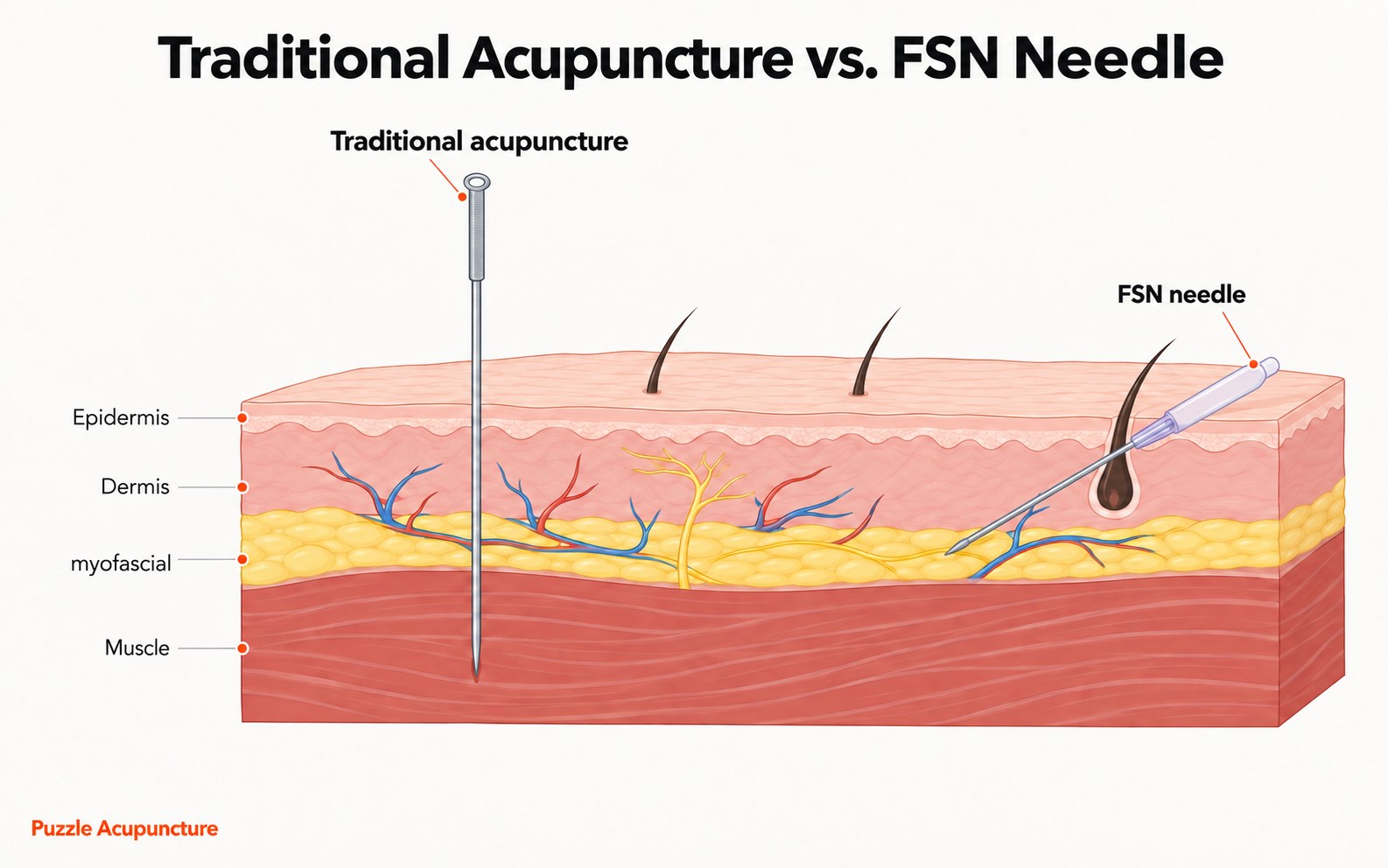
FSN is Fu's Subcutaneous Needling, developed in China in the mid-1990s. The needle goes in at a shallow angle and stays in the loose layer under the skin, above the muscle. She sweeps it gently side to side while guiding you through specific movements, and the muscle group lets go.
It is for a whole tight area rather than one sore point: chronic neck, shoulder and low back pain, trigger points, overuse, posture, training load, the guarding that stress leaves in a muscle. The release is quick, and she re-tests your range of motion before you are off the table, so the session answers its own question.
FSN is a treatment you take part in. You work while you are on the table, pushing against her hand, holding a position, moving the joint through its range, while she sweeps the needle and reads what the tight area does under load. The needle opens the layer. The movement is what releases it. Dr Deb holds the FSN certificate.
In the United States acupuncture is mostly a cash-pay service outside the hospital system. In China it is a hospital specialty, with departments inside general hospitals, staffed by people who trained as physicians first.
Where insurance covers it here at all, it covers pain, and sometimes fertility. Coverage decides who walks through the door.
The field here did not choose that shortlist. Billing did, and a practitioner only gets good at what keeps arriving.
People take a child with a cough to one of those, or a rash, or a stomach that has never been right.
That difference in scope decides where the knowledge accumulates, and the gap shows plainly in the literature.
Practitioner counts are the closest available match: China licenses Chinese medicine physicians, a broader category than the acupuncture-only licence issued in the United States.
I read the Chinese literature because that is where the work is being done. Most of it is never translated, and almost none of it reaches a clinic here.
I won a homebrew beer competition for my milk stout (ranked 3.99 on Untappd). I created ginger beers that got popular. At one point, I was remembered as the one who created strawberry flavor ginger beers among the brewing circle. I ferment natto, pickles, plum wine, ghee, and even stinky tofu. I love the San Francisco Homebrewers Guild. Fermenting is seriously fun.
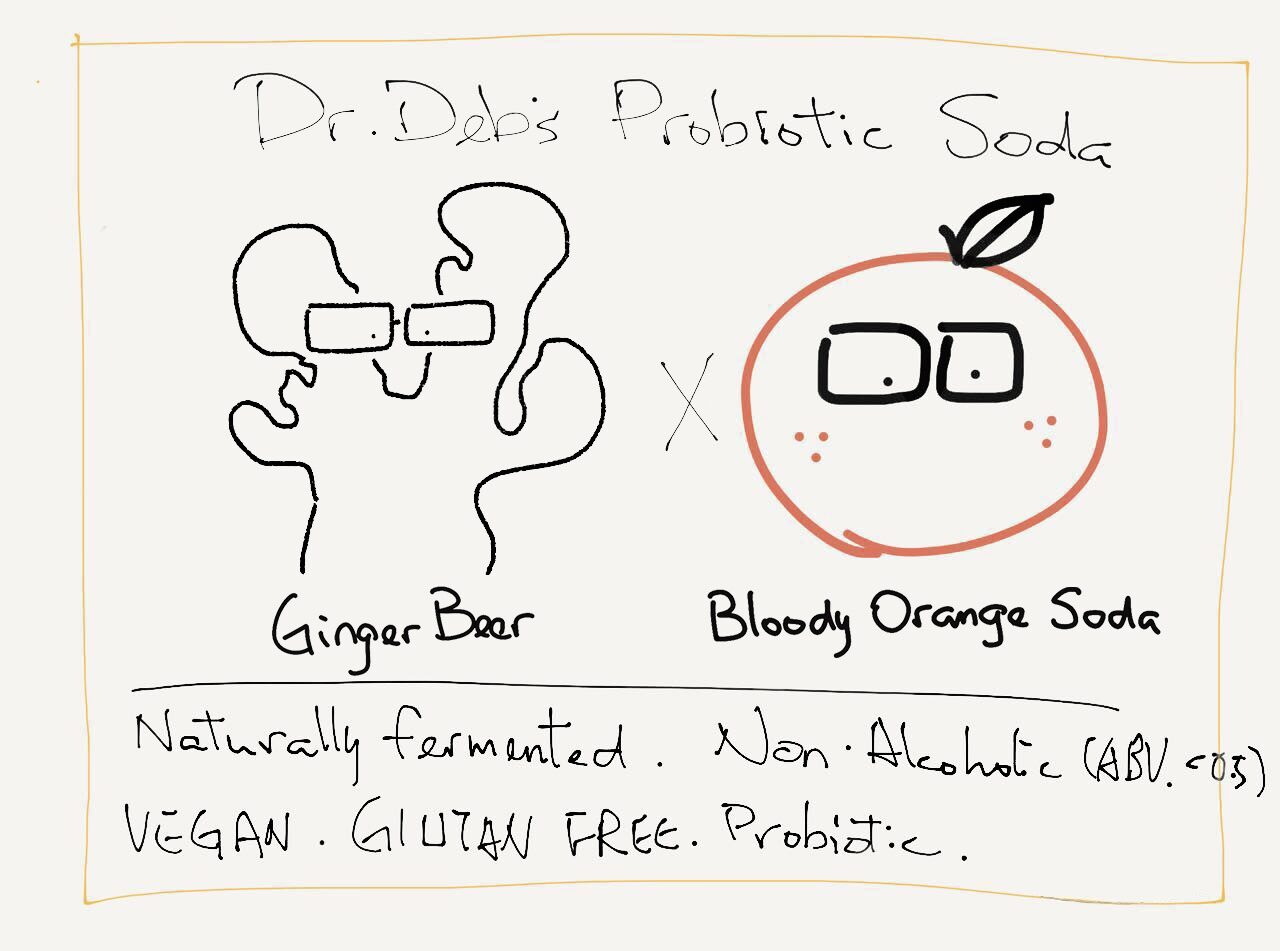
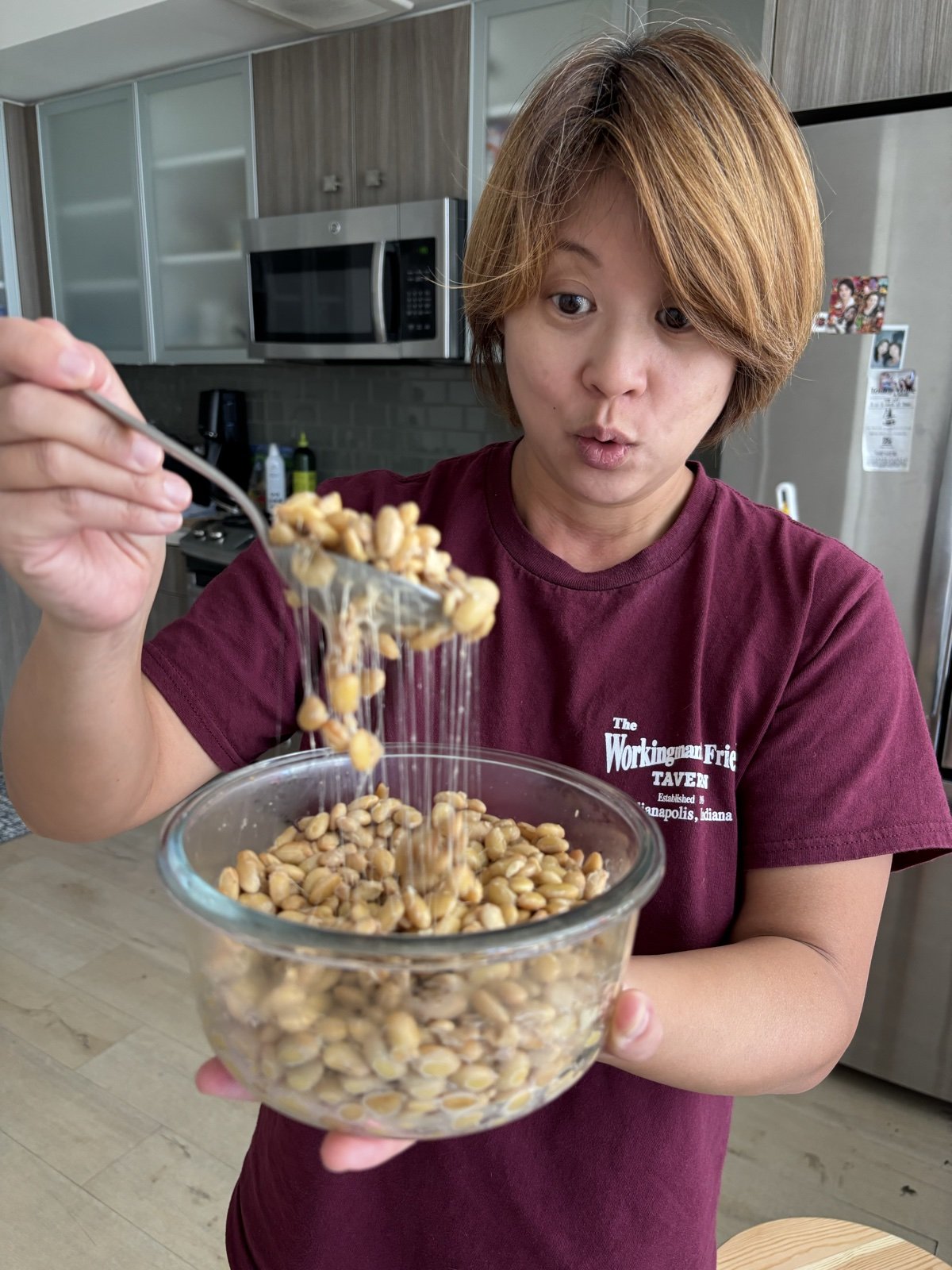
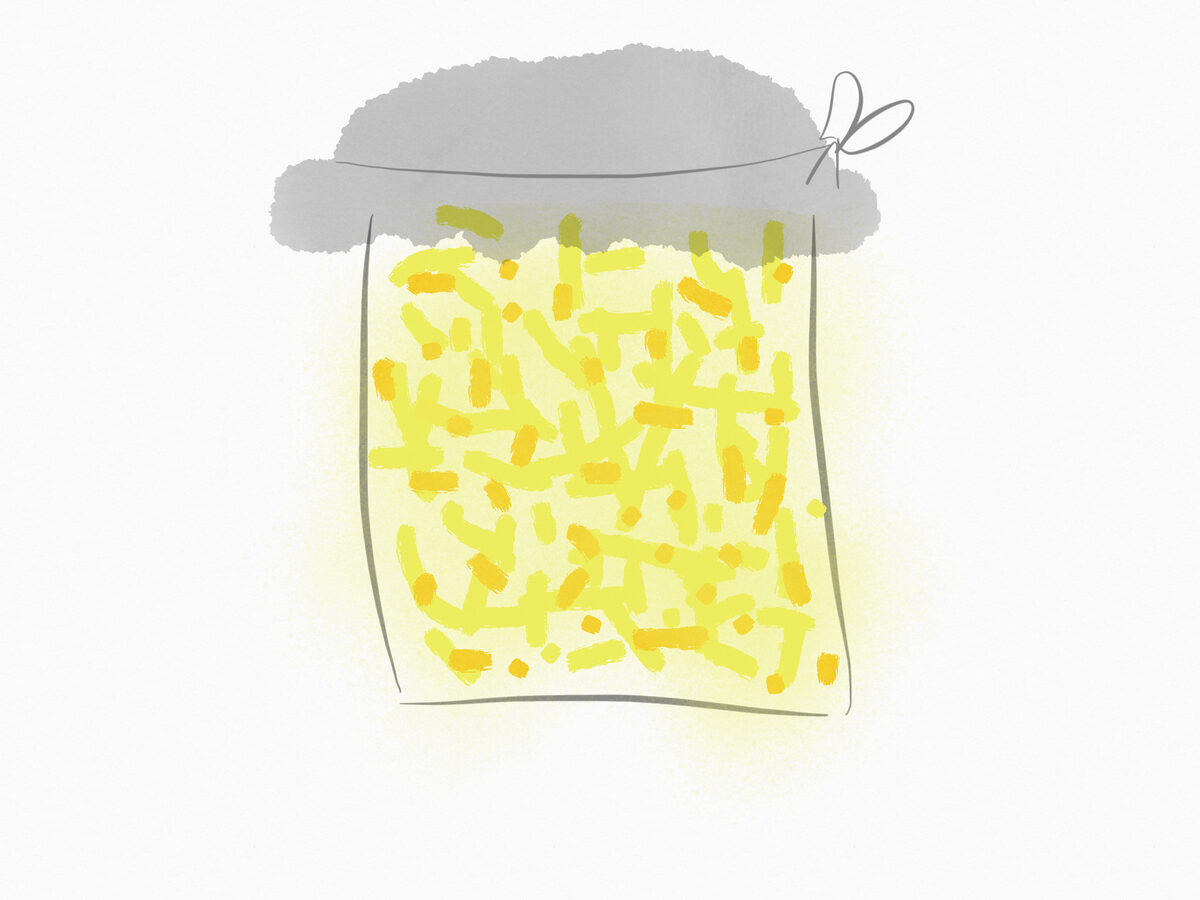
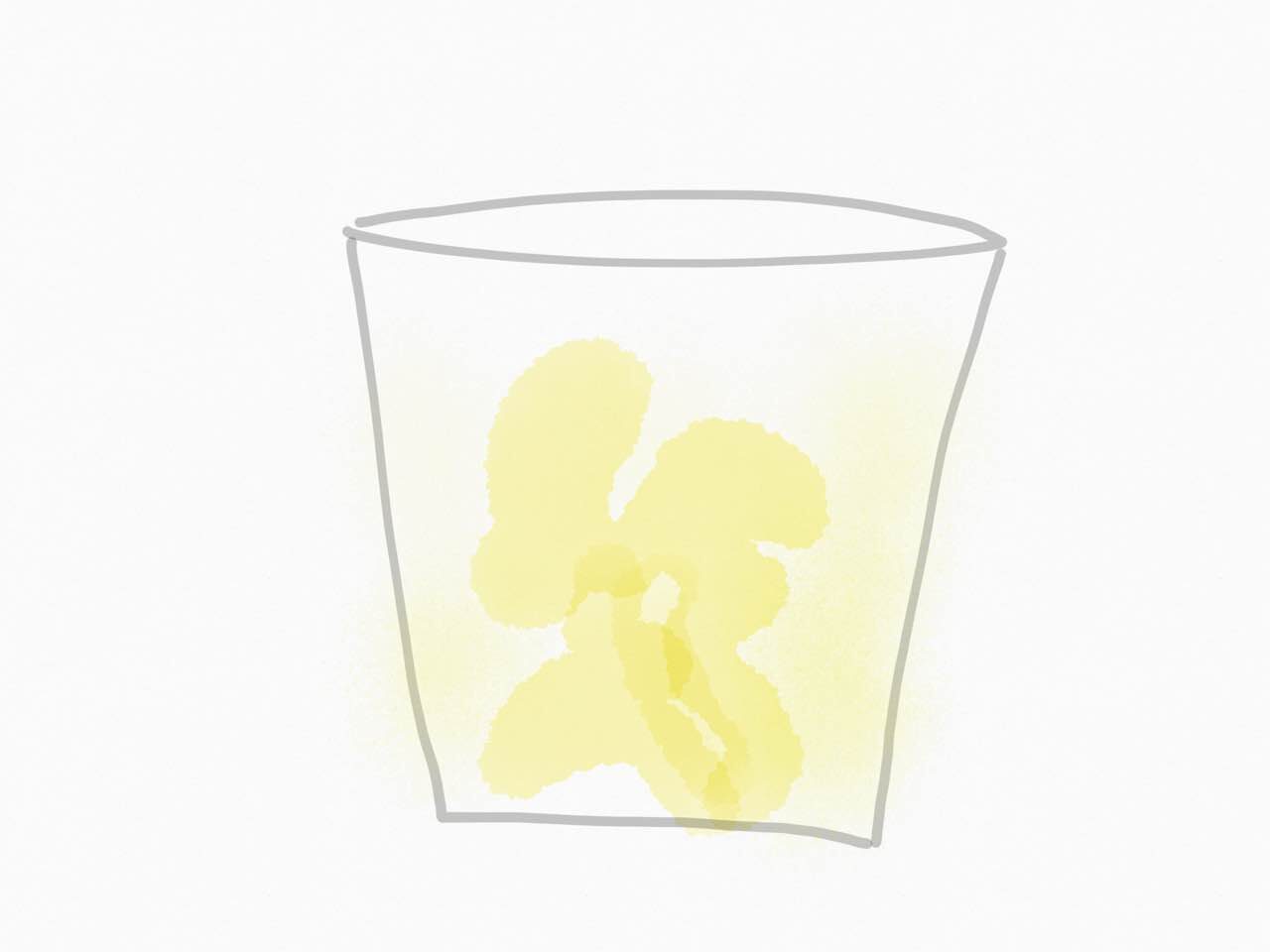
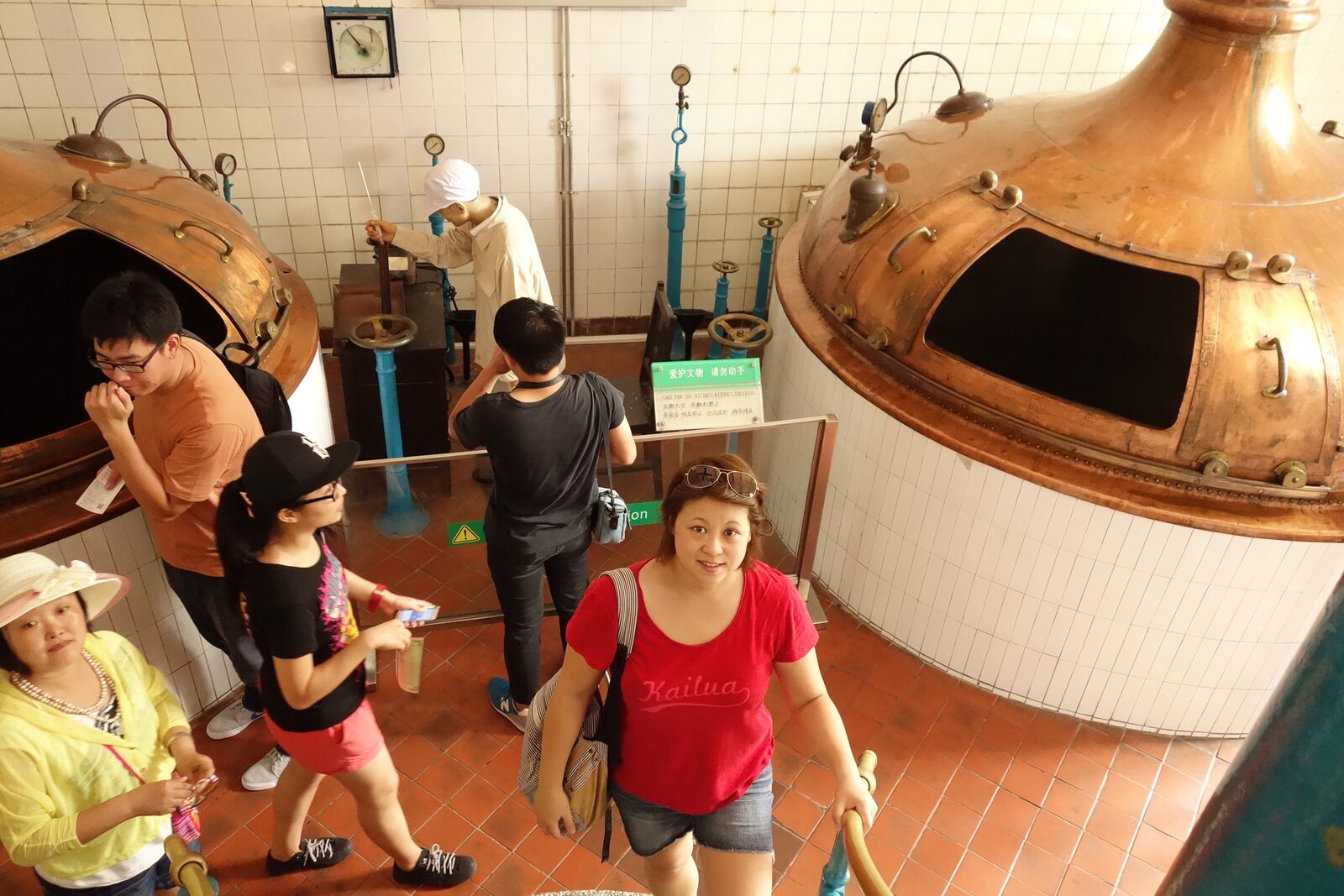
The flyer and the two drawings are mine. The jar is a ginger bug, the starter the soda is built on, and the glass is what it turns into. The natto is a separate project. The photograph is a brewery tour.
The free consult is a conversation, not a treatment. She will tell you whether this is something she can help with, and what it would take.
No spam, unsubscribe anytime.