Anxiety is not one condition. Whether it comes as attacks or a constant hum, and whether your system is wired or already run down, decides how I treat it.
Dr Deb Ma, PhD, LAc, OMD · 1640 Valencia St, San Francisco
Chinese medicine calls the symptoms that occur together a pattern. These five patterns come from the Puzzle burnout workshop. The names describe a Chinese-medicine framework, not a disease in the named organ.
Tick every statement that fits you today. Your pattern shows as you go.
No selections yet
Your pattern
Acupoint
He Gu (LI 4)
Location: Webbing between thumb and index finger
Press firmly for 3 minutes each hand
Use when anxious or tense
Avoid strong pressure here if pregnant
Suggested to-do
Your pattern
Acupoint
Zu San Li (ST 36)
Location: Four finger-widths below kneecap, outer shin
Press firmly for 3 minutes each leg
Try it during an afternoon movement break
Suggested to-do
Your pattern
Acupoint
Yong Quan (KD 1)
Location: Ball of foot, front third, in the depression
Massage for 3 minutes each foot before bed
Try it as part of a bedtime wind-down
Suggested to-do
Your pattern
Acupoint
Dan Zhong (RN 17)
Location: Center of chest, between nipples
Massage in circles for 3 minutes
Use gentle circles while breathing slowly
Suggested to-do
Your pattern
Acupoint
Guan Yuan (RN 4)
Location: Three finger-widths below belly button
Massage with palm for 3 minutes
Use gentle palm pressure
Suggested to-do
Your result is a starting point, not a diagnosis. Bring it to the first visit, where I check it against your history, pulse, tongue and abdomen.
I spend 30 minutes on the examination. We talk about sleep, work, appetite, digestion, caffeine and, where relevant, the menstrual cycle. I also ask what medication you take and when you started it.
On the table, I examine the areas that feel tight, including the chest, diaphragm, jaw, neck and abdomen, and check your pulse and tongue. Together, those findings guide the points and any herbal prescription.
We agree on what you want to change and when to review the plan. A short weekly anxiety scale helps us track progress alongside sleep, tension and how you are managing daily life. If those are not improving, we reconsider treatment rather than automatically adding visits.
For a diagnosed anxiety disorder, psychological treatment and medication are established options. Acupuncture can be considered alongside that care. Any change in medication is a decision for you and your prescriber.
Research on generalized anxiety disorder is encouraging, but it does not establish the same benefit for panic attacks or burnout. Trials use different patients, techniques and treatment schedules. The Hamilton Anxiety Scale, scored from 0 to 56 in a clinician's interview, is one way they measure change.
A 2023 Guangzhou trial enrolled 112 perimenopausal women with generalized anxiety disorder. They received twelve sessions over four weeks of acupuncture or blunt placebo needles that did not penetrate the skin. The chart shows the 88 women included in the final analysis. The acupuncture group had lower anxiety scores three months after treatment; the loss of 24 participants and the single-center design limit how confidently we can apply that result to other patients.
Perimenopausal women with generalized anxiety disorder: anxiety scores before treatment and three months after it ended
Hamilton Anxiety Scale, lower is better. The axis starts at 9, not at zero.
Liu et al., Frontiers in Psychiatry, 2023. First Affiliated Hospital of Guangzhou University of Chinese Medicine. Forty-four women per group were analyzed. At three-month follow-up, average scores were 10.09 with acupuncture and 15.66 with placebo needles. These are group averages, not a prediction for an individual patient.
A separate 2022 trial in people with Parkinson's disease and anxiety found no clear difference between real and sham acupuncture after eight weeks of treatment, but a larger anxiety-score reduction with real acupuncture eight weeks later. That finding concerns Parkinson's-related anxiety. It does not show that acupuncture keeps working after treatment for everyone.
A 2025 review led by Guang'anmen Hospital combined 41 trials involving 3,209 people with generalized anxiety disorder. Average anxiety scores favored acupuncture in comparisons with sham needling, medication alone, and medication with acupuncture added. The authors rated the main anxiety evidence as low or very low certainty. These estimates support further study and a monitored treatment trial, not a claim that acupuncture should replace an effective medication.
Points lower on the anxiety score with acupuncture than with the comparison treatment, two 2025 reviews
Average Hamilton Anxiety Scale differences favoring acupuncture. The reviews include different populations and overlapping studies; the rows are not a ranking of treatments.
Lai et al., Annals of General Psychiatry, 2025: generalized anxiety disorder, 41 trials overall (rows 1, 3 and 4). Jiang et al., Frontiers in Neurology, 2025: 14 trials overall, but only seven contributed to the Hamilton score result in row 2. That review mixed primary anxiety disorders with anxiety measured in perimenopause, insomnia, depression and Parkinson's disease. Results varied substantially between studies.
A herbal prescription follows the examination and a review of your medications. The herbs below illustrate traditional roles within a formula for irritability and tension. Terms such as “heat”, “blood” and “Liver” belong to that traditional framework; they do not mean we have measured inflammation, a blood disorder or liver disease.
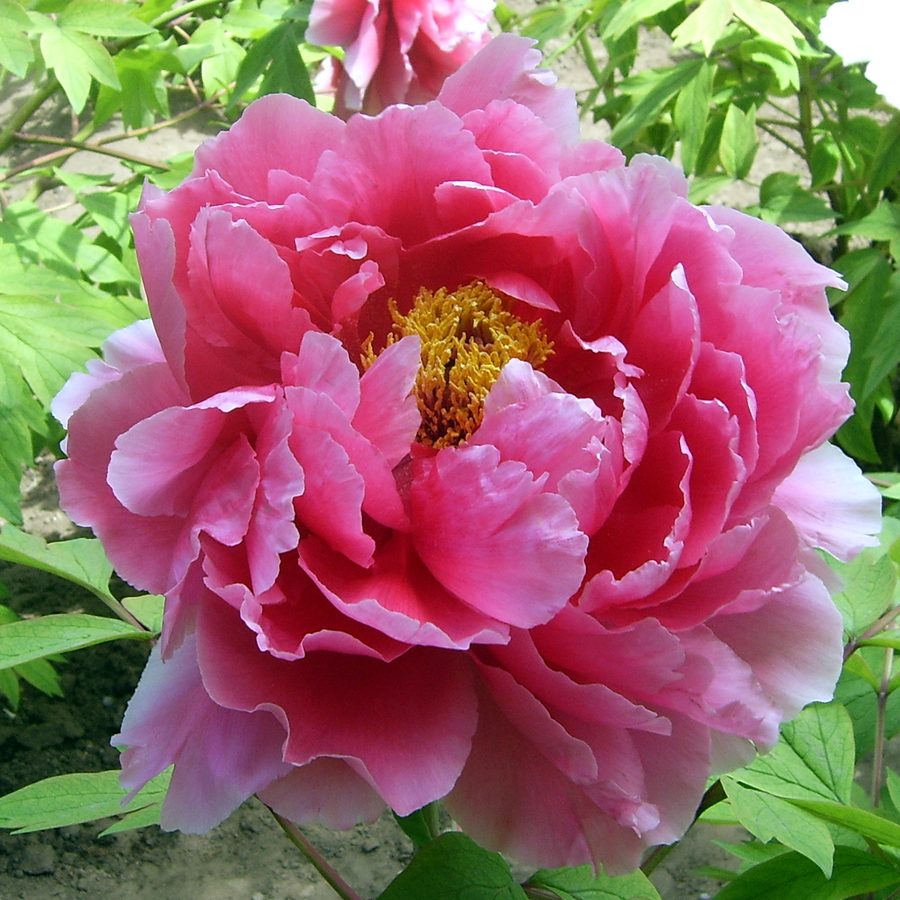
Mǔ dān pí
moutan bark
Traditionally chosen for the “heat” part of a pattern, such as irritability with a flushed or overheated feeling.
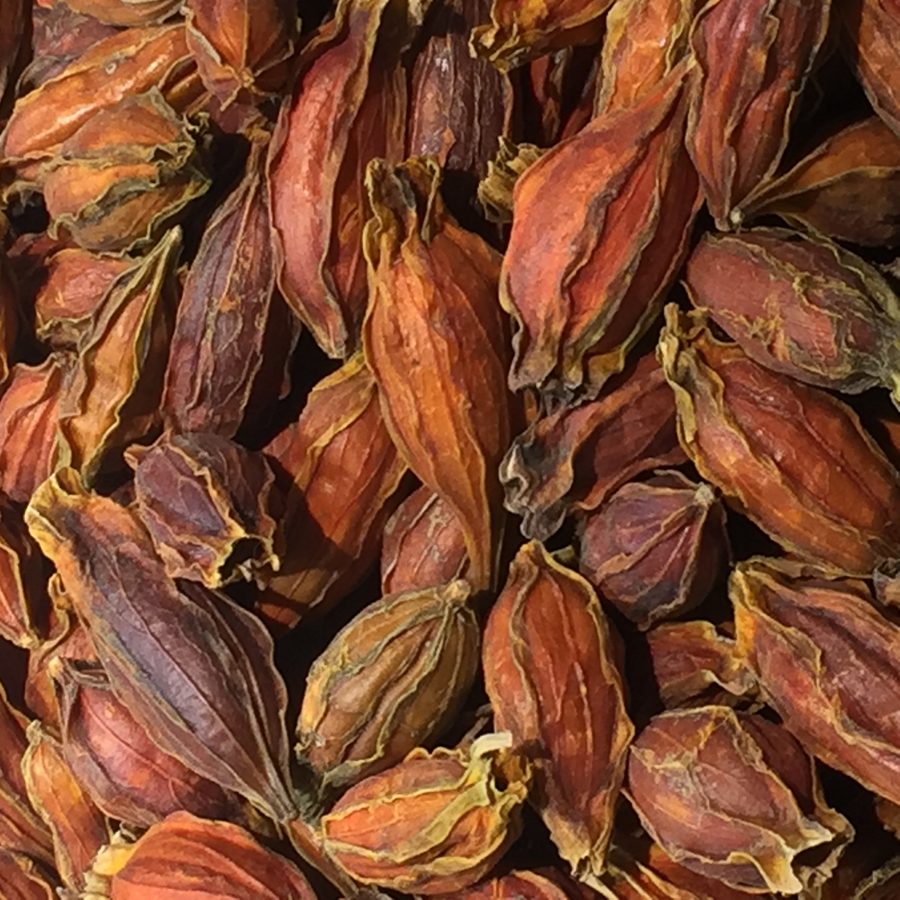
Zhī zǐ
gardenia fruit
Another traditionally “cooling” herb, used in formulas for restlessness and irritability.
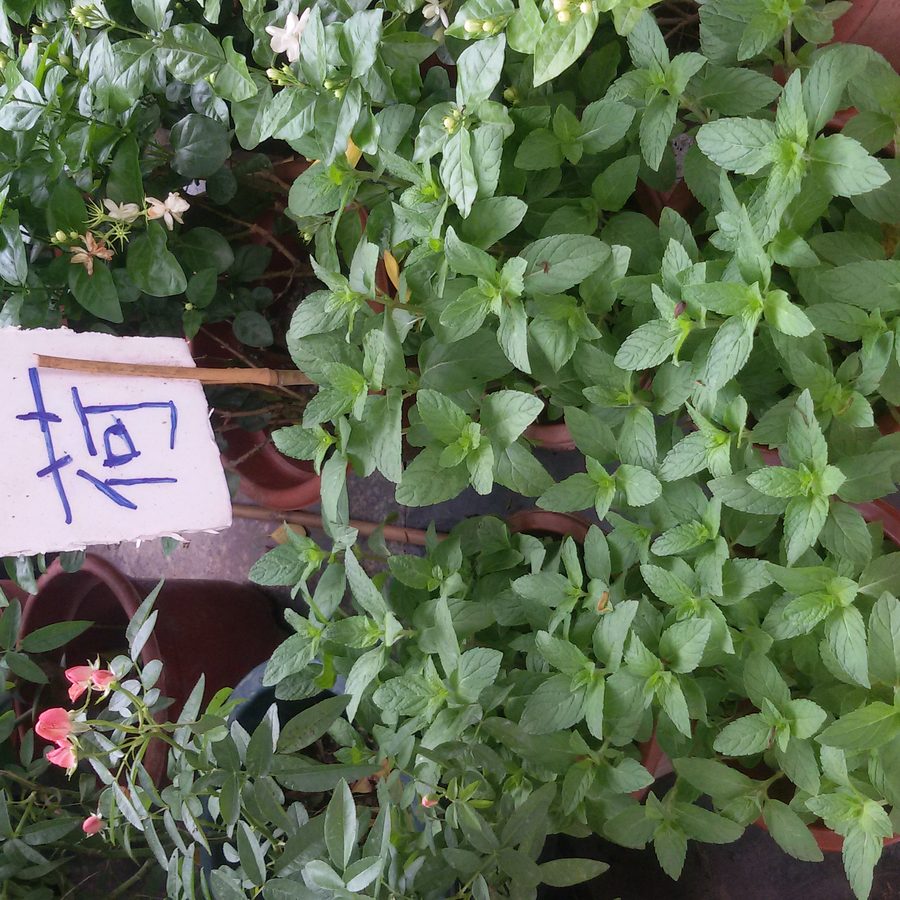
Bò he
field mint
Used in small amounts in formulas traditionally intended to ease a tense, constrained feeling.
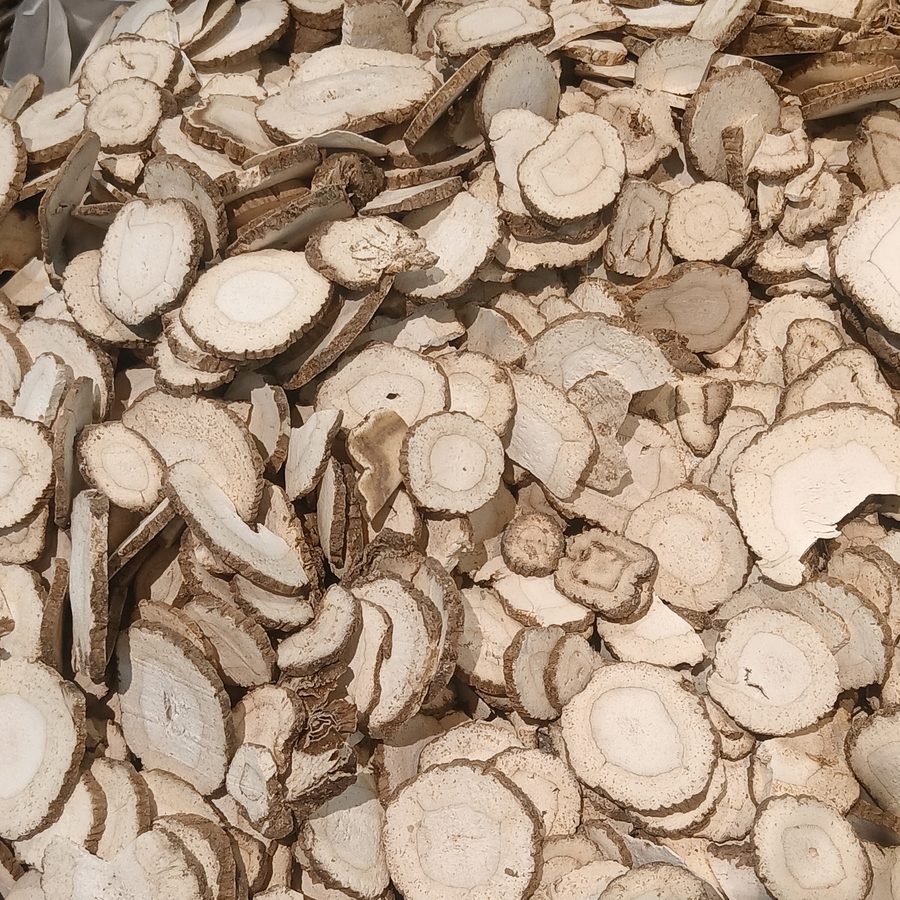
Dāng guī
Chinese angelica root
Traditionally described as “nourishing blood”. That is a pattern description, not a treatment for anemia.
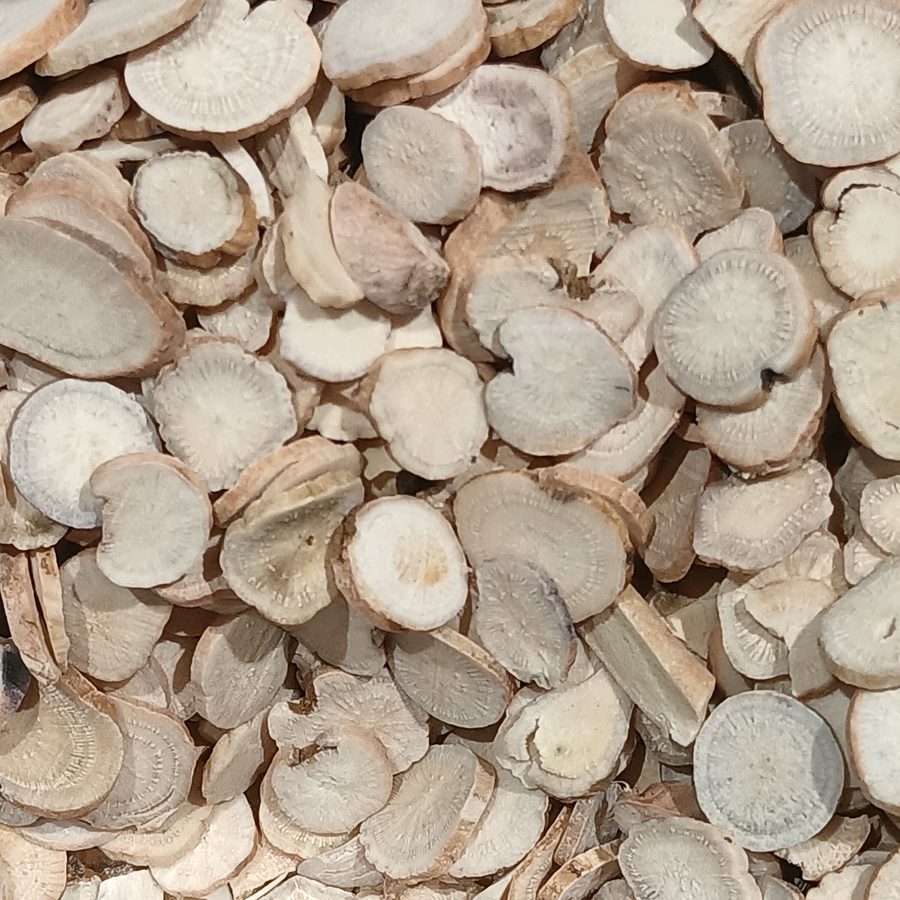
Bái sháo
white peony root
Often paired with angelica in formulas where tension occurs alongside signs of depletion.
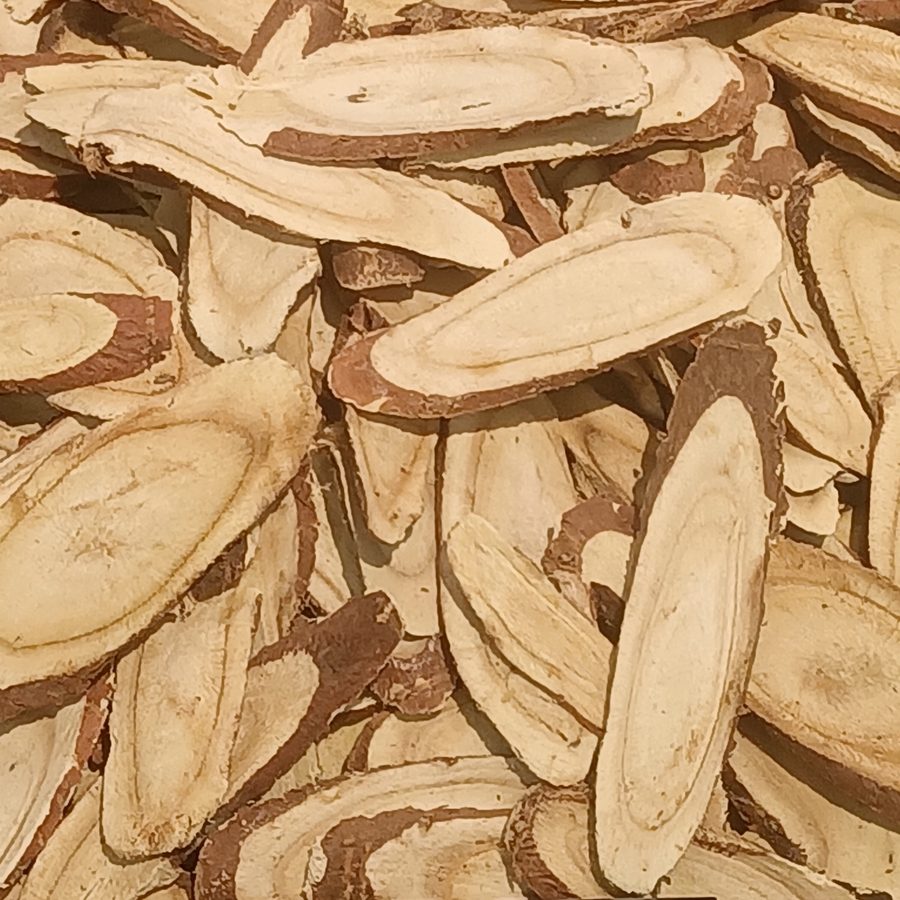
Gān cǎo
licorice root
Traditionally used to balance a formula. It still needs a safety check, especially with blood-pressure or heart conditions.
Photographs: Shizhao (CC BY-SA 3.0), PQ77wd (CC BY-SA 4.0), via Wikimedia Commons. Each is a round crop from the source photograph.
These are traditional uses, not proof that each herb treats anxiety. Do not build a prescription from this list. Licorice can affect blood pressure and heart rhythm, and herbs can interact with medicines. Bring your prescriptions and supplements before we discuss a formula.
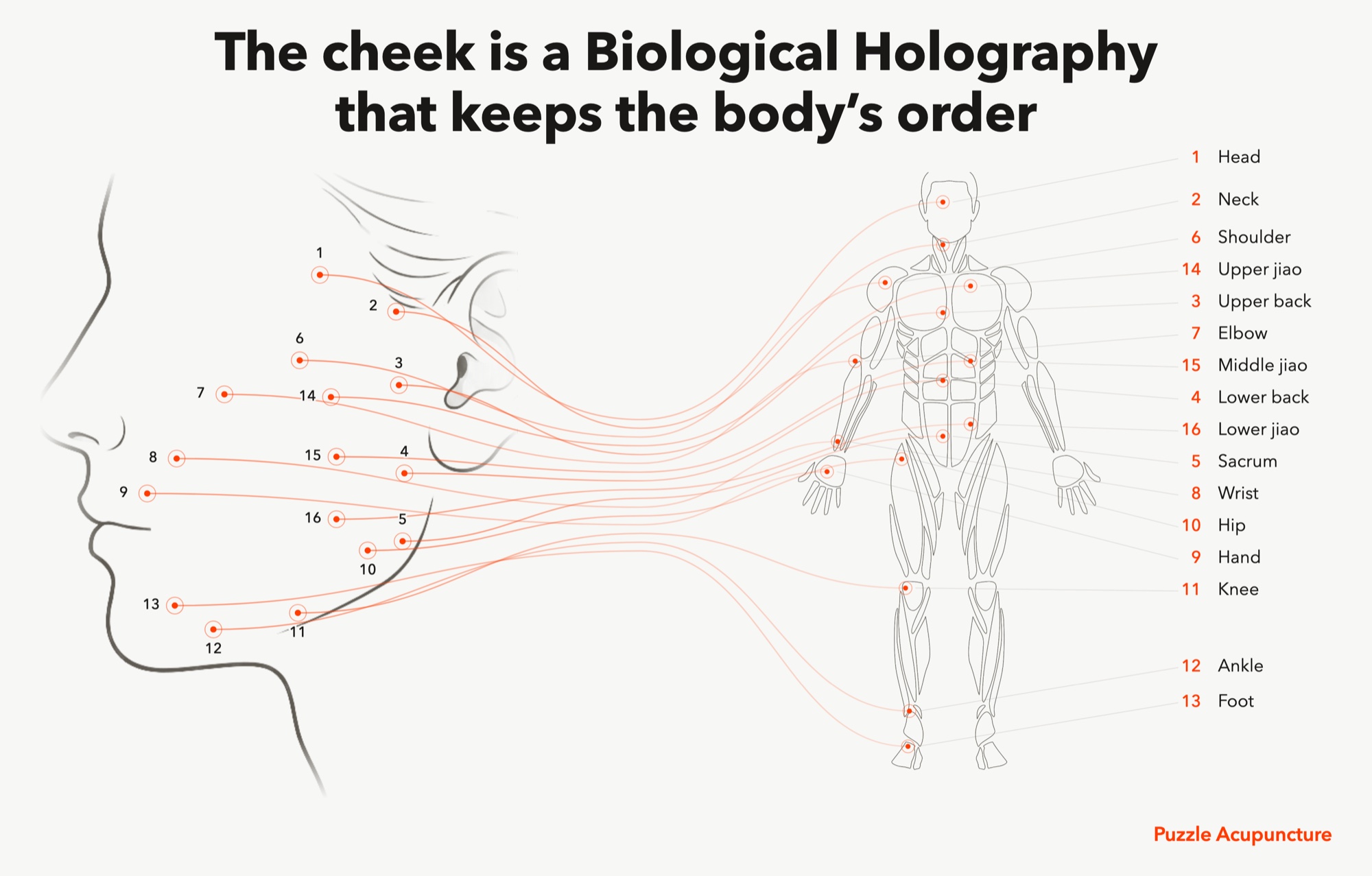
Cheek acupuncture uses a standardized map of points on the face, needled shallowly, a few at a time. It is not cosmetic facial acupuncture. I explain the points before starting and adjust the treatment to your comfort.
I hold the Level 3 certificate. A 2026 trial at Zhejiang Provincial Hospital of Chinese Medicine compared cheek acupuncture, sham cheek acupuncture and sertraline in people with moderate depression. Anxiety was one of the outcomes measured during a twelve-week course; the acupuncture schedule was three sessions a week, 36 sessions in all. This was not a trial in panic disorder or primary generalized anxiety disorder, and it does not establish immediate relief during an attack.
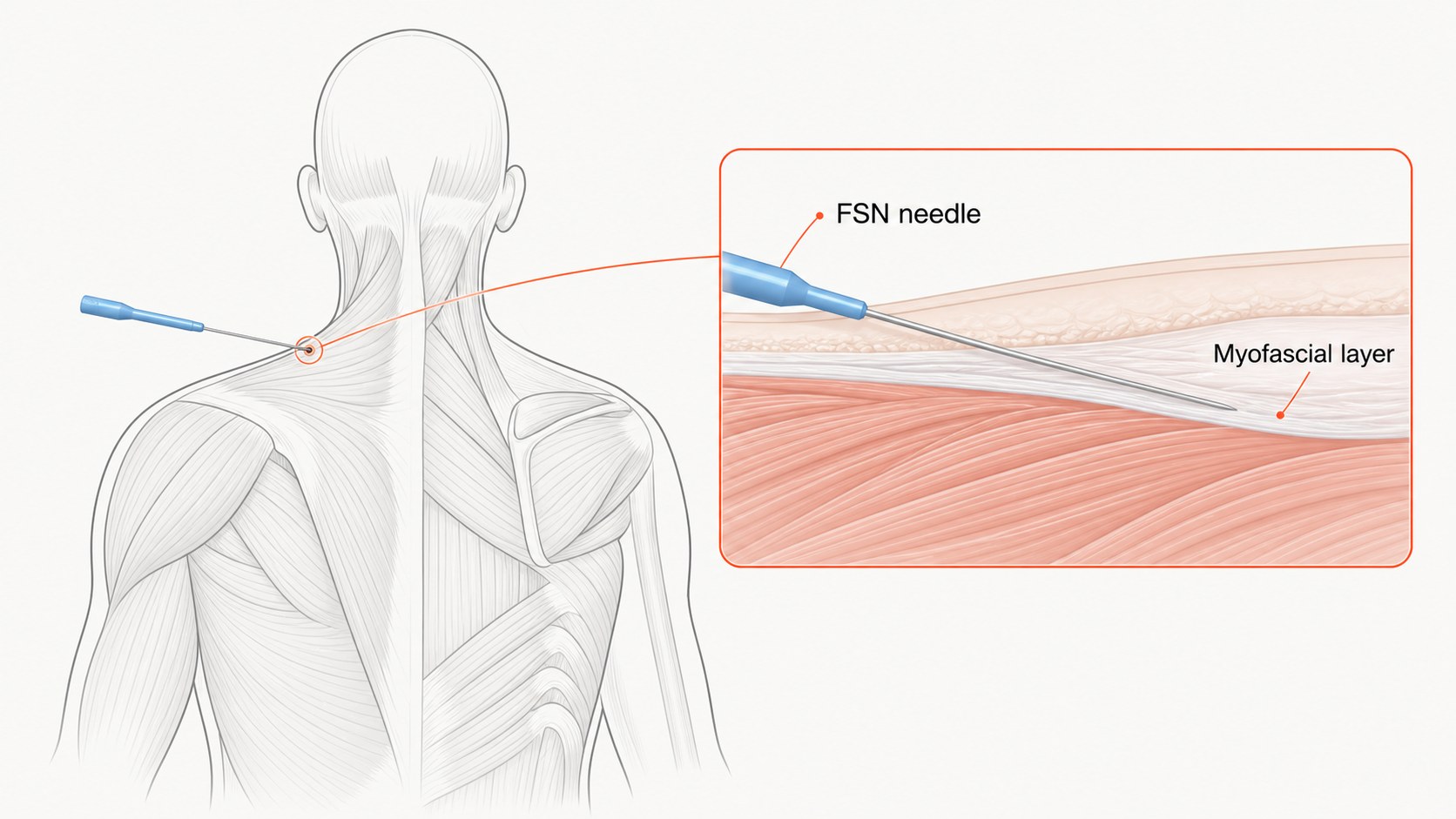
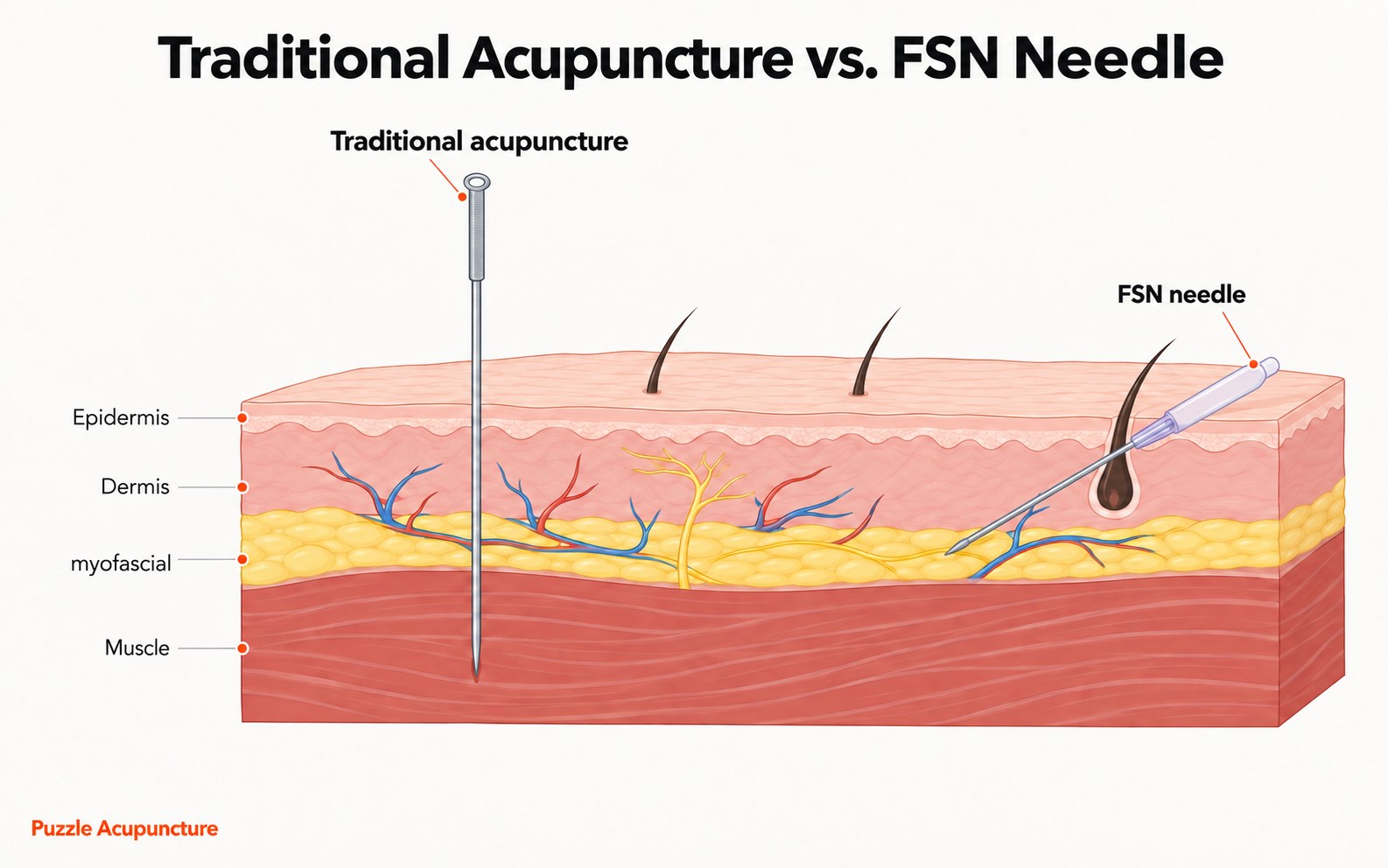
FSN is Fu's Subcutaneous Needling. The needle stays in the loose layer under the skin, above the muscle. I sweep it gently side to side while guiding you through movements, then re-test your comfort and range of motion. I hold the FSN certificate.
I may use it when neck or shoulder pain accompanies anxiety. Research on muscle pain cannot tell us whether FSN treats an anxiety disorder. We assess the muscle symptoms separately rather than treating a looser shoulder as proof that the anxiety has improved.
Less than people expect. The needles are about the width of a human hair, and I use fewer of them than most practices. Most people describe a dull heaviness at the point rather than pain. Tell me if anything feels uncomfortable so I can adjust it.
There is no reliable visit count that applies to everyone. We agree on a review point before starting and track a short weekly anxiety scale alongside sleep, tension and daily functioning.
The studies used courses lasting several weeks, in specific patient groups. They do not establish immediate relief from a panic attack or a fixed twelve-visit course for burnout. If there is no worthwhile change, we reconsider the plan.
Yes. You do not need to feel anxious to come in. The self-check helps you describe changes in your sleep, energy, mood and physical symptoms. At the first visit, we discuss what is affecting daily life and whether acupuncture is a useful addition to your care.
Yes. Acupuncture can sit alongside therapy and psychiatric care; it does not replace them. We can agree on shared goals, such as better sleep or less muscle tension, and check whether treatment is helping. Bring your medication list. With your permission, I am glad to share observations with your prescriber or therapist.
Yes, unless the person who prescribed it says otherwise. I do not adjust prescriptions. If reducing a medication is your goal, discuss it with your prescriber, who decides whether and how to change the dose. Acupuncture is not a reason to stop an antidepressant or a benzodiazepine on your own.
Fewer than you are imagining. Where they go depends on what the exam finds rather than on the word anxiety, and I talk you through it before anything happens. If needles worry you, say so. We can discuss a gentler approach and stop whenever you need.
The first consult is free. A new patient visit is $255 for 75 minutes and follow-ups are $205 for 60 minutes. Current rates are on the pricing page.
The consult is free. We go through your history, what you are taking, and whether acupuncture is a reasonable thing to add. If it isn't, I will tell you.