MIGRAINE & SLEEP DISORDERS
Acupuncture for Migraine in San Francisco
Migraine is not one condition. Where the pain sits on your head, what sets it off, and what it brings with it point to different causes. Each one is treated differently.
Trained and practised in Beijing
17 years, most of them in Beijing
Fewer needles
Point selection is deliberate and minimal.
Mission District
Care at 1640 Valencia St, San Francisco
Migraine, tension headache and cluster headache: how to tell which one you have
First, is this actually migraine? Tension-type headache, migraine and cluster headache get lumped together as “just a headache,” but they come from different mechanisms and need different treatment.
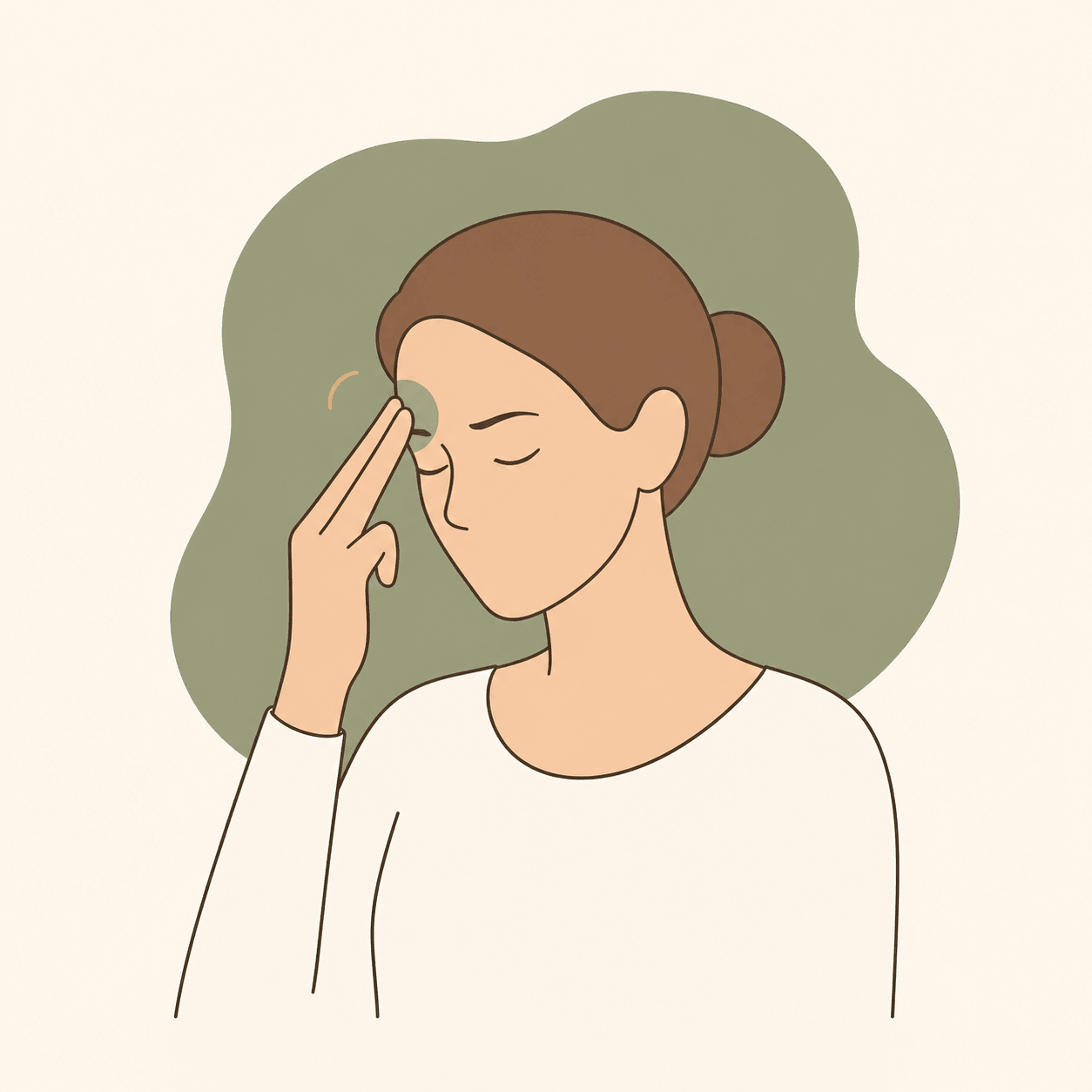
Tension-type headache
Dull pressure on both sides of the head
Feels like a tight band around the skull
Common with stress and poor posture
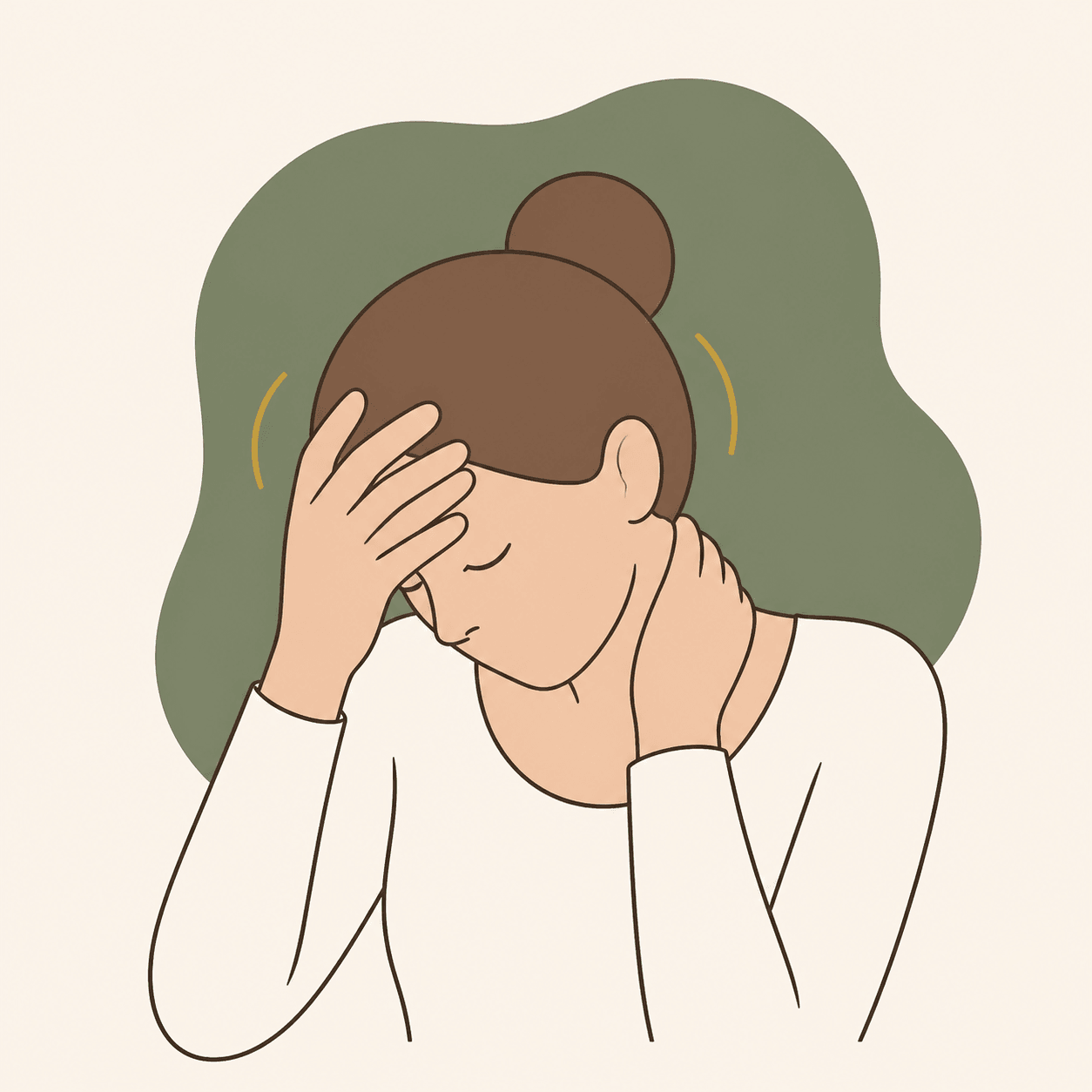
Migraine
Usually one-sided, throbbing pain
Sensitive to light and noise
Often comes with nausea
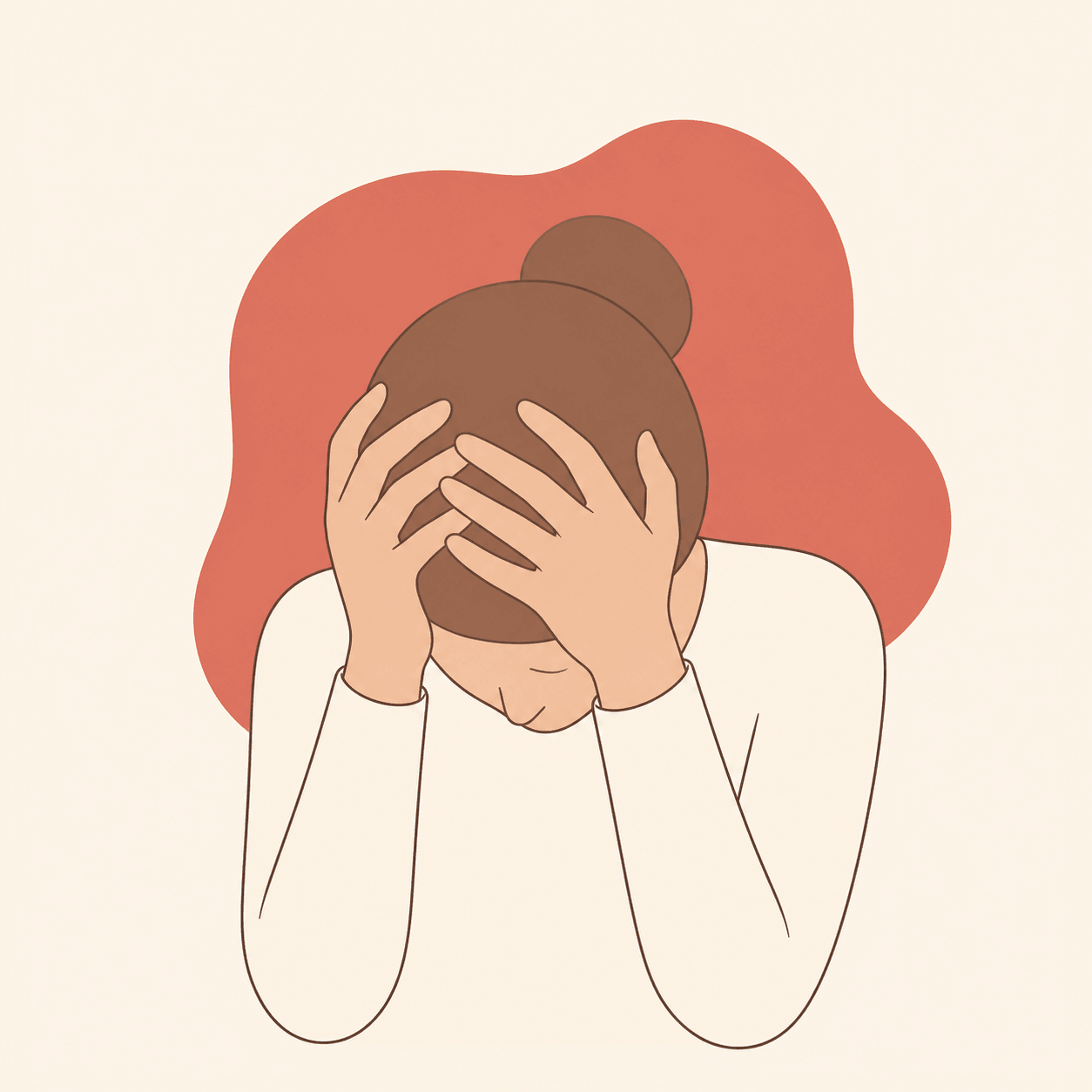
Cluster headache
Severe pain fixed around one eye
Watery eye and a blocked nose, same side
Attacks are extremely intense but short
Standard clinical differentiation between the three headache types (ICHD-3). If your headache does not match the migraine column, I will say so at the first visit rather than treat it as one.
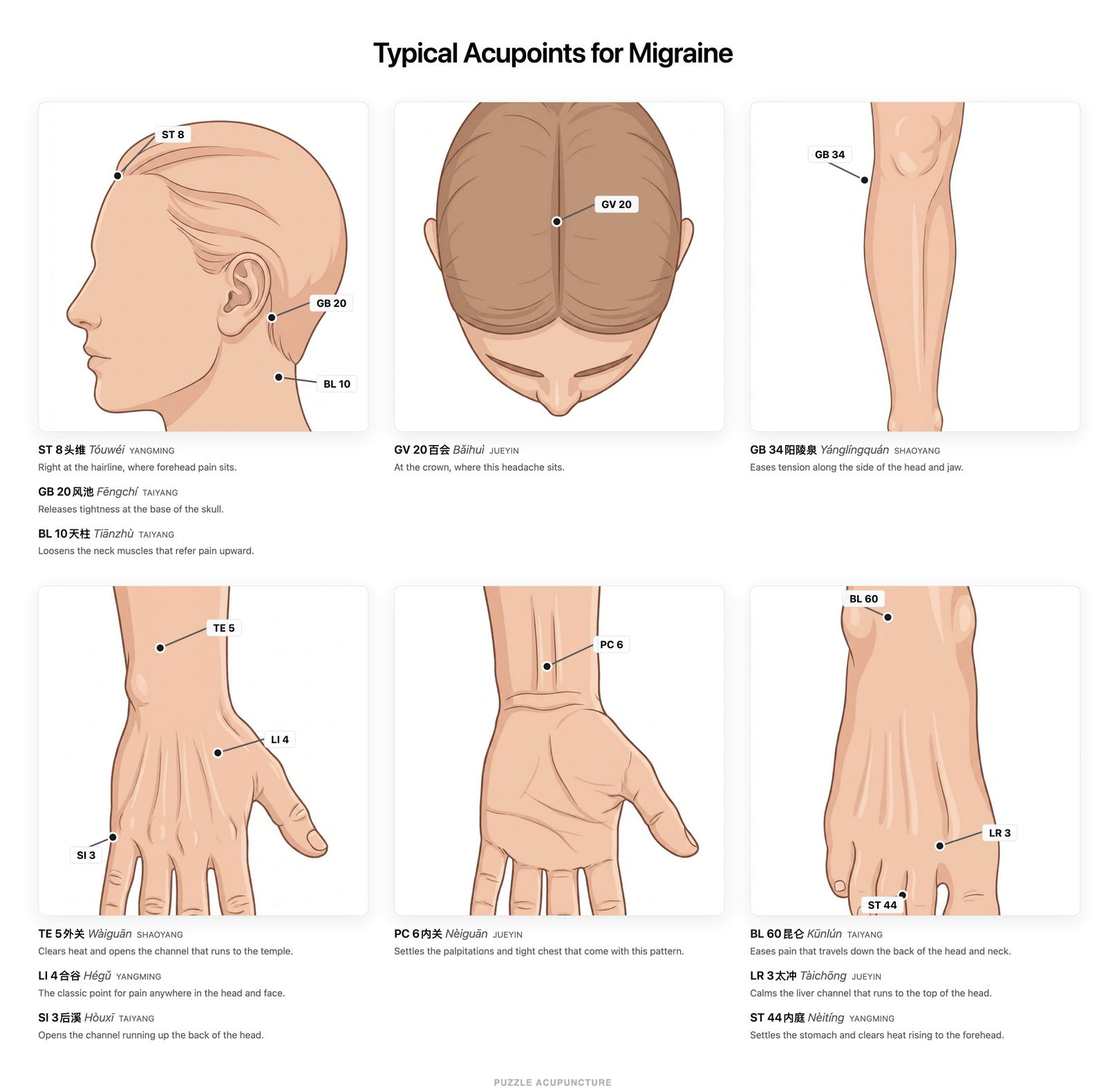
Migraine is sorted by location: temple, forehead, back of the head, top of the head
Two people can both be told they have migraine and need completely different treatment. The difference is where the pain sits.
Head pain runs along channels, and four of them account for nearly everything I see. The location tells me which channel. What comes with the headache confirms it. Together they decide how I treat you.
Chinese medicine sorts migraine as a dynamic symptom
Almost nobody arrives with the same combination as the person before them. I treat the body in front of me.
Where the pain is
What usually comes with it
Temple and the side of the head
Shaoyang
A bitter taste, sighing, sweating, discomfort in the ear, throat or cheek, tightness under the ribs.
Forehead and brow
Yangming
Nausea, vomiting, an unsettled stomach.
Back of the head and the neck
Taiyang
Eye pain, eyes watering in wind, a blocked or running nose, pain travelling down the neck and upper back.
Top of the head
Jueyin
Palpitations, a tight chest, mood swings, hot palms.
“I get migraines” is not enough to work from. Your first visit is longer than the rest.
The four patterns driving migraine: rising liver yang, phlegm, blood stasis, deficiency
Location tells me where. It does not tell me why, and two headaches in the same place can still need different treatment.
Pain comes from one of two situations. Either something is obstructing flow, 不通则痛, no free flow, then pain. Or not enough is reaching the tissue, 不荣则痛, no nourishment, then pain. A blocked drain, or a dying battery. Almost every headache I treat is one or the other.
Four presentations cover most migraine.
What the pain feels like
What else is going on
What it tells me
Distending and throbbing, usually one side, worse under pressure
Irritability, broken sleep, tension held in the jaw and shoulders.
Rising liver yang. The most common picture I see in San Francisco, and the one that responds fastest.
Heavy, muzzy and dull, like a cloth wrapped around the head
Nausea, fullness, heaviness after eating, foggy thinking.
Phlegm turbidity. Slower to shift, and diet matters more than people want it to.
Sharp and stabbing, severe, fixed in the exact same spot every time
Sometimes an old head or neck injury, sometimes nothing obvious.
Blood stasis. The most stubborn of the four, and the one where technique matters most.
Milder but constant, worse after exertion
Fatigue, pallor, poor appetite, waking unrefreshed.
Qi and blood not sufficient. Treated by building, not by clearing, and it takes longer.
These four get different points, different technique and a different course length.
A stabbing pain that never moves and a heavy dull pressure are not the same problem. Treating them the same way is the usual reason people tell me acupuncture did not work somewhere else.
I spend 30 minutes in examination, and I prefer modern techniques for immediate results
First, the examination
I ask about your life rather than only about your head. Sleep, work, appetite, digestion, stress, and for women the period, because attacks that track a cycle are treated differently from attacks that do not. Then you lie down on the table and I look for where the tension starts.
That part tells me more than the questions do. Migraine rarely turns up on its own. It usually comes with a digestive picture, and when I palpate the abdomen the stomach is often tight in a way people have stopped noticing. The neck and the shoulders have something to say as well. The source of the tension is usually not where it hurts.
Then, choosing the treatment plan
What the exam found decides the plan. Traditional acupuncture is the basic layer under almost every course. The four locations and the four patterns are the diagnosis. The points follow from them, which is why two people who both say migraine get different treatment. The WHO standard fixes 361 classical points, and 349 of them were already written down in a text finished in the 250s. It is the most widely used traditional medicine in the world.
What goes on top is chosen for you, and it works fast.
DIGESTION, AND HARD TO REACH
Cheek acupuncture
A mapped set of points on each cheek, needled shallowly, only a few at a time. It was developed in China from 1991, and it is new enough that Guangdong only wrote a standard for it in June 2025.
Most of the evidence comes from surgery. A review of 40 trials in 3,009 patients found it reduced pain, and in one trial five cheek needles before anaesthesia more than halved the nausea afterwards. That is abdominal surgery, not migraine, and I will not pretend otherwise. I use it when digestion is the loud part of the picture, and when the tension sits where ordinary needling cannot reach. It works fast, so I reach for it when someone arrives mid attack.
LARGE AREAS OF TENSION
FSN needling
A Chinese doctor, Fu Zhonghua, invented it in Guangzhou in 1996, and the F is his surname. The needle sits in the layer above the muscle and never goes into it. I sweep it gently while you move the arm or turn the head. That movement is half the technique. Roughly forty muscles each have their own.
It covers far more ground than a single point, so I use it when a whole shoulder or a whole back is tight, or when the pain has been there long enough to turn chronic. Neck and shoulder tension is a bigger part of migraine than most people are told. A review of eight trials in 519 patients rated the evidence for pain moderate. For migraine itself, one trial is running in Guangzhou and there are no results yet.
BETWEEN VISITS
Chinese herbs
A first-century text lists 365 medicinals. By 1596 the great Ming compendium listed 1,892 of them and 11,096 formulas, and had taken its author 27 years to write. The formula dictionary now holds more than 90,000.
A formula is matched to what is driving your migraine, not to the word migraine, and it keeps working on the days you are not on my table. I use them when attacks are frequent enough that the week between visits is the problem. They are slower than needles and they do not taste good. If I do not think you need them, I will say so.
AT HOME
Movement built around your day
Not a generic sheet of stretches. If you are at a screen for nine hours, the work is at the neck and upper back, and it has to happen a few times a day rather than once at the gym. If you are on your feet all day it is a different set. If your attacks land on the first day of a holiday, the problem is the week before it, and no amount of stretching touches that.
So I give you two or three things that fit the life you actually have, written down rather than remembered.
WHERE THIS COMES FROM
Chinese medicine has been practised for over 2,200 years
Chinese medicine is not an alternative to modern medicine. It is older by roughly two thousand years, and it spent them treating people and writing down what happened.
The earliest surviving description of the channels was sealed in a tomb in 168 BCE. The first book devoted entirely to acupuncture fixed the location and the use of three hundred and forty nine points, and was finished in the third century. Those are the points I still use, in the places that book put them.
Chinese medicine
Modern Western medicine
Channel theory written down · about 2,200 years
First text devoted to acupuncture · about 1,770 years
Germ theory and modern biomedicine · about 160 years
The randomised controlled trial · 78 years
Each bar starts when that body of knowledge first appears in writing and runs to the present day. The channel texts were sealed in a tomb at Mawangdui in 168 BCE and describe the vessels rather than needling; the acupuncture classic was compiled in the 250s to 280s; the germ theory era runs from the 1860s; the randomised controlled trial is dated from the Medical Research Council streptomycin trial of 1948.
Modern biomedicine is a young field by comparison, and it is candid about that. The instrument it now judges everything by, the randomised controlled trial, is younger than most people’s grandparents.
That is not a criticism of it. It is a reason to be careful about which questions each is good at answering.
Modern medicine is unmatched at isolating a single variable in a laboratory. Chinese medicine has something else: two thousand years of watching what happens to real people over whole lives, written down.
Chinese medicine vs Western medicine, methods and limitations
They are not doing the same job, one of them badly. They are looking at different objects, and that shows up in how each builds a plan, and again in where each runs out.
What it looks at
Chinese medicine — One whole person, and how the parts are affecting each other.
Western medicine — A defined disease, checked against criteria.
How the plan is made
Chinese medicine — Assembled for you at the visit, and changed as you change.
Western medicine — Written before you walked in. Meet the criteria and you get the standard.
Where it runs out
Chinese medicine — The practitioner is the variable. The same presentation can get meaningfully different treatment depending on how long your acupuncturist has practised and how many cases like yours they have seen.
Western medicine — When nothing resolves into a box, there is often very little left to offer.
Neither column is the better one. It is why I have met so many Western trained doctors who later studied Chinese medicine. They were not looking for a replacement for what they already knew. They wanted both columns.
How Chinese medicine doctors collaborate with Western medicine
In China that collaboration is a formal programme with a name, 中西医协同, and a definition that leaves no room for a courtesy visit: both sides take part, both sides decide, both sides carry the responsibility. For migraine, one method rarely holds the attacks on its own. Mild to moderate, the drug goes first and acupuncture is added if that is not enough. Severe, both run from the start.
The attack
Western medicine — A triptan or an anti-inflammatory, working fast.
Chinese medicine — Acupuncture eases an attack more slowly, and is what is left when tolerance, side effects or a contraindication rules the drug out.
Why both — The drug is faster. The needles stay available when the drug route closes.
Between attacks
Western medicine — Taken long enough, a drug loses ground to tolerance and adverse effects.
Chinese medicine — Regular acupuncture, regulating qi and blood, bringing down how often attacks come and how hard they hit.
Why both — Relief now from one side, fewer attacks to relieve from the other.
What sets them off
Western medicine — Endocrine regulation, and diet.
Chinese medicine — Stress, and sleep quality.
Why both — Between them, most of what a migraine reacts to.
Standard Chinese clinical practice for combining acupuncture with migraine medication.
WHERE IT IS PRACTISED NOW
Chinese medicine is evolving and innovating in China, while TCM study in the US is limited by market size and lack of resources
In the United States acupuncture is mostly a cash-pay service outside the hospital system. In China it is a hospital specialty, with departments inside general hospitals, staffed by people who trained as physicians first.
Where insurance covers it here at all, it covers pain, and sometimes fertility. Coverage decides who walks through the door.
An acupuncture clinic in the US
Roughly what gets paid for, and so roughly what walks in
Pain
Sometimes fertility
The field here did not choose that shortlist. Billing did, and a practitioner only gets good at what keeps arriving.
A Chinese medicine hospital in China
Departments, the way any hospital has departments
Paediatrics
Digestion
Dermatology
Gynaecology
Neurology
Oncology
People take a child with a cough to one of those, or a rash, or a stomach that has never been right.
That difference in scope decides where the knowledge accumulates, and the gap shows plainly in the literature.
1.68 billion
Outpatient visits to Chinese medicine institutions in China in 2024, from the national health statistics bulletin.
China
United States
Licensed practitioners
Chinese medicine physicians in China; licensed acupuncturists in the US
China
971,000
United States
34,000
Dedicated Chinese medicine hospitals
Full hospitals, not clinics
China
6,397
United States
None
Years of training before independent practice
Degree plus supervised hospital residency
China
8 years
United States
about 3 years
Each row is measured in its own units, so compare the two bars within a row rather than across rows. Practitioner counts are the closest available match: China licenses Chinese medicine physicians, a broader category than the acupuncture-only licence issued in the United States.
China’s national guidance on treating migraine without drugs was written in 2021 by neurologists and acupuncture researchers together, neurology departments at the PLA General Hospital and Chongqing Medical University sitting with the acupuncture institutes at Chengdu and the China Academy of Chinese Medical Sciences. It does not argue for acupuncture. It prints the protocol: which points for which presentation, at what frequency, for how many courses.
In 2023 the Chinese Society of Neurology, a conventional medical body, wrote acupuncture into its own migraine guidance for both acute attacks and prevention.
The trials underneath it are multi-centre studies of a hundred and fifty to two hundred and fifty migraine patients, published in JAMA Internal Medicine, the BMJ and Cephalalgia. When the first international guideline for treating migraine with acupuncture was published in 2023, a review in the Bulletin of the World Health Organization compared twenty five headache guidelines from around the world and rated it the best of all of them.
Why individualised treatment is hard to study, and the registry China built instead
Look back at the top of this page. Four locations, four driving patterns, and the treatment changes with each. That is the whole method, and it means two people with the same diagnosis are deliberately given different points.
A drug trial cannot easily accommodate that. It needs everyone in a treatment arm to receive the same thing, so a study that hands acupuncture one fixed protocol is measuring something other than what a practitioner does in a room. That is my own view.
It is also why the research infrastructure in China looks different. The China Academy of Chinese Medical Sciences has run an international acupuncture case registry since 2017, recording what practitioners did and what happened across thirty provinces, rather than what a protocol instructed.
I read the Chinese literature because that is where the work is being done. Most of it is never translated, and almost none of it reaches a clinic here.
Frequently Asked Questions
Does it hurt?
Less than people expect. The needles are about the width of a human hair, and I use fewer of them than most practices. Most people describe a dull heaviness at the point rather than pain, and a fair number fall asleep on the table.
How soon will I know if it is working?
I tried acupuncture before and it did nothing. Why would this be different?
Do I keep taking my medication?
Is it safe during pregnancy?
How many needles?
What does it cost?