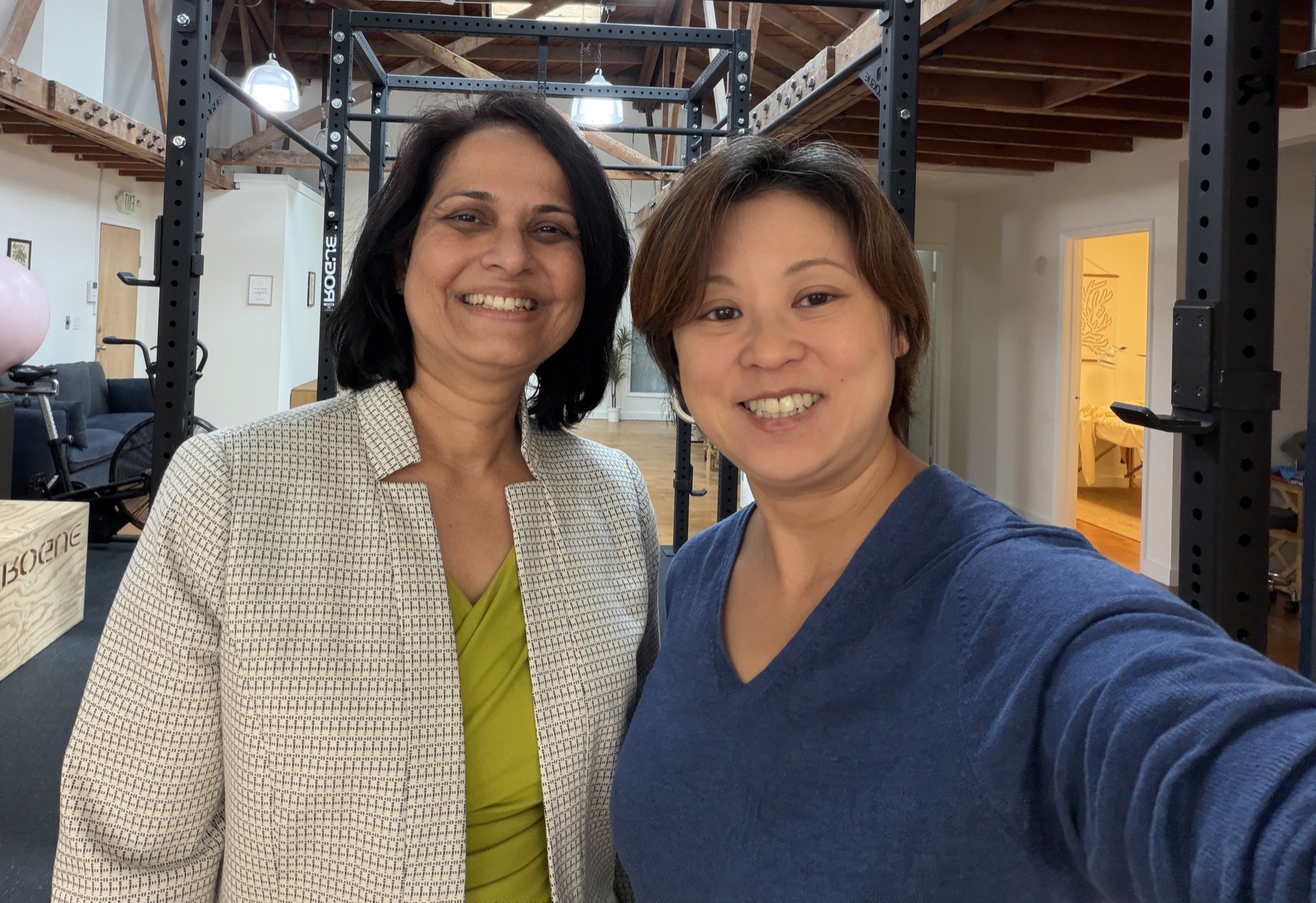
Integrative physician Dr. Malathi Acharya puts it plainly in episode 20 of Puzzle Exchange: “Not everything can be fixed with a pill, right?” We discuss an integrative approach to menopause care, bringing prescribed treatment, Ayurveda and Chinese medicine into the same conversation. Later, she demonstrates two breathing exercises for a pause during a stressful day or the transition to bedtime.
An integrative approach brings treatments together
Malathi's interest in integrative medicine grew from seeing people with “so many symptoms but didn't fall into any disease bucket.”
She brings her medical training together with Ayurveda, the traditional Indian medical system: “It's just not medications, it is diet, lifestyle, and medications.” Her approach keeps prescribed treatment in the picture: “Sure, yes, you need to take it, but we can do this, this, and this alongside that will help.”
For menopausal hot flashes, hormone therapy remains the most effective treatment, with suitability depending on individual benefits and risks. The Menopause Society explains those considerations.
Evidence for acupuncture depends on the symptom being treated. The Society's 2023 nonhormone therapy statement does not recommend acupuncture, paced breathing or herbal supplements for hot flashes because the evidence is negative or insufficient. It supports options including cognitive behavioral therapy and clinical hypnosis. Our discussion of individualized Chinese medicine describes how I practice; it does not establish acupuncture as a proven hot-flash treatment.
Menopause care starts with the details
When Malathi asks how I decide where to put the needles, my answer starts with sleep, dreams, digestion, diet and activity: “Every little detail of what they tell me will tell me the story about it.” Tongue and pulse assessment are also part of my Chinese medicine consultation.
In our discussion of menopause, I describe several patterns that can guide my choice of acupuncture points and herbs:
- Thirst, weakness and difficulty falling asleep: I discuss these through a kidney yin deficiency pattern.
- Irritability and mood changes: I consider the liver pattern.
- Digestive trouble, worry and disrupted sleep: I discuss the spleen pattern.
These are traditional Chinese medicine patterns, not diagnoses of kidney, liver or spleen disease. Tongue and pulse findings do not measure hormone levels.
Two people going through menopause may need different treatment plans. Sometimes herbs are part of mine: “I will combine with herbal medicine and acupuncture.” As I explain in our conversation, “There's not just one answer, there's so many ways to treat the same patient.”
That includes reviewing whether herbs suit the person and the prescriptions and supplements they already take. NCCIH describes safety and quality concerns with Chinese herbal products.
Breathing exercises for everyday stress
Our conversation then turns to everyday stress and winding down for bed. These are general breathing practices, and her instructions begin simply: “You just need a place to sit comfortably and do it. That's all. You don't need anything else.”
Local test booking. No email is sent.
15-minute Strategy Session
Not sure acupuncture is right for you?
What’s included
- Discuss your health concerns and goals
- Address any questions before committing to your first appointment
- We'll determine the best approach
“She's the first doctor that made me feel human and not like just another nameless number.”
GC, on Zocdoc
Next available
Loading available times…
Pacific time. No payment is taken online.
See other times
Pick a time
Times in Pacific time (San Francisco).
Alternate nostril breathing
1. Set up your hand. Sit comfortably. Fold your right index and middle fingers toward your palm, leaving your thumb and ring finger available.
2. Find the contact points. Place your thumb beside your right nostril and your ring finger beside your left. Left and right refer to your own body.
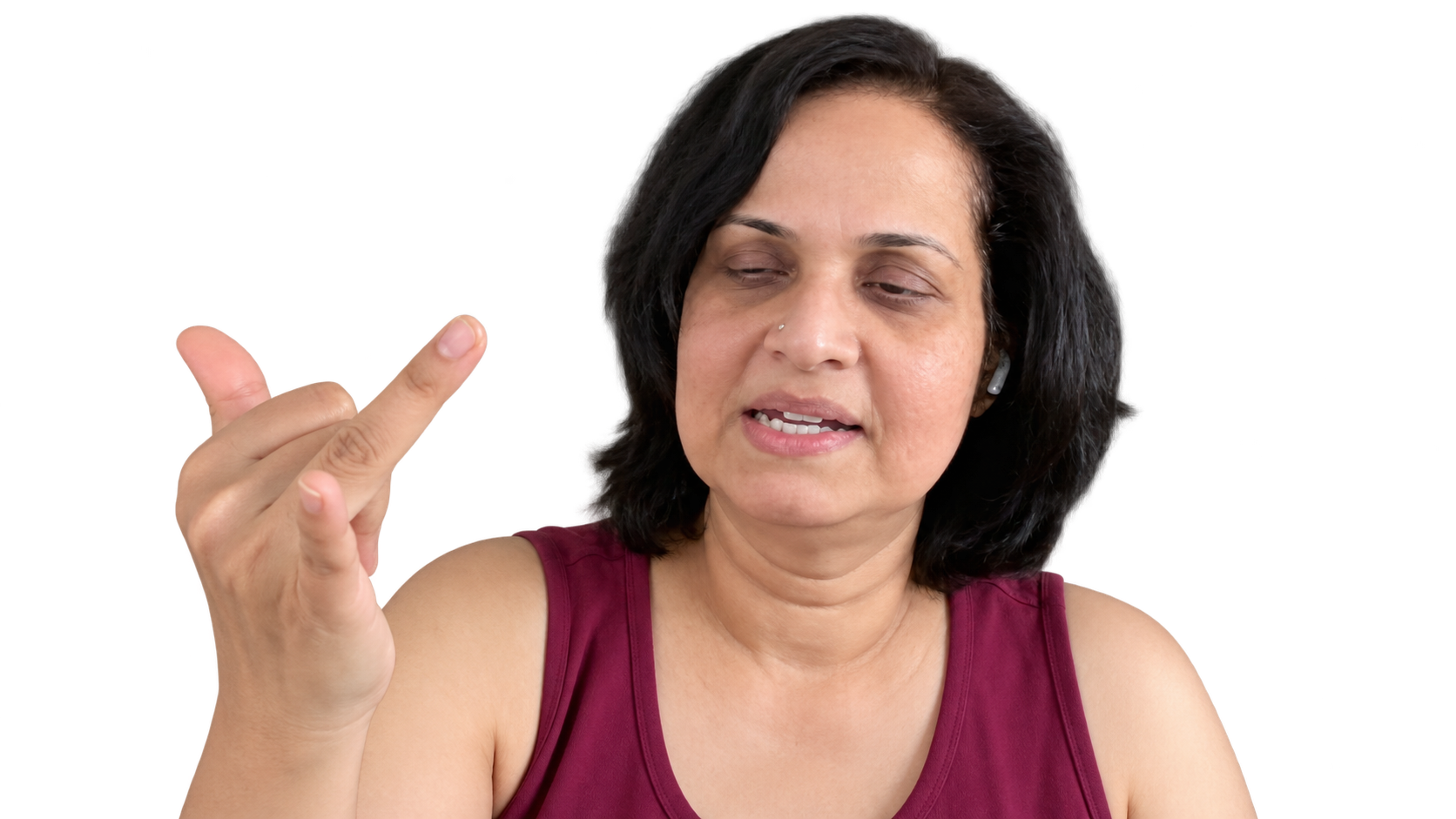
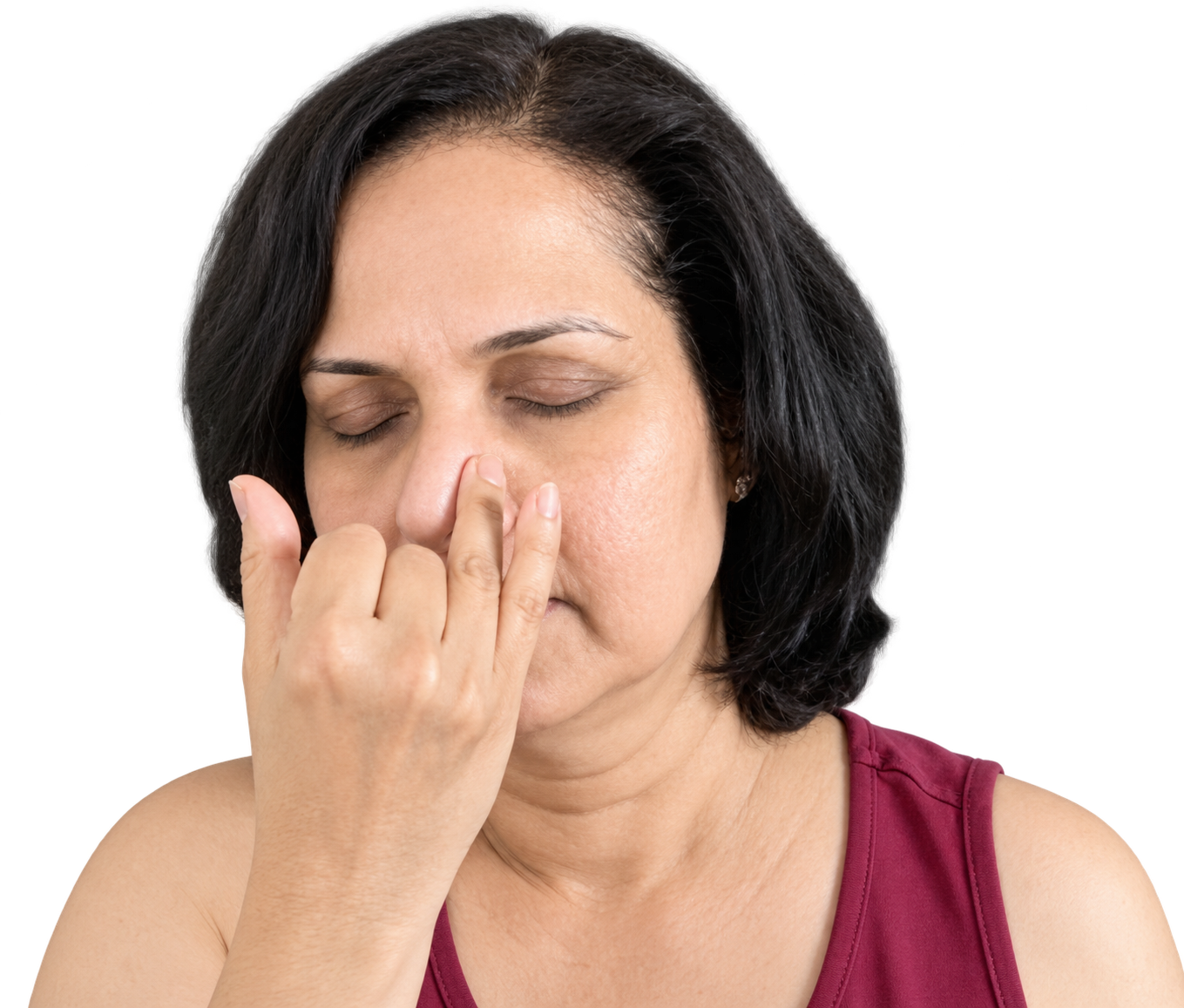
3. Complete the cycle. Take an easy breath in and out through both nostrils. Then:
- Close the right nostril. Breathe in through the left.
- Close the left nostril. Breathe out through the right.
- Keep that position. Breathe in through the right.
- Close the right nostril. Breathe out through the left.
Malathi suggests starting with three or four cycles. She demonstrates a four-count inhale and eight-count exhale, with a brief pause when switching. Keep your rhythm comfortable; do not force the count or hold your breath to keep up.
Humming bee breath
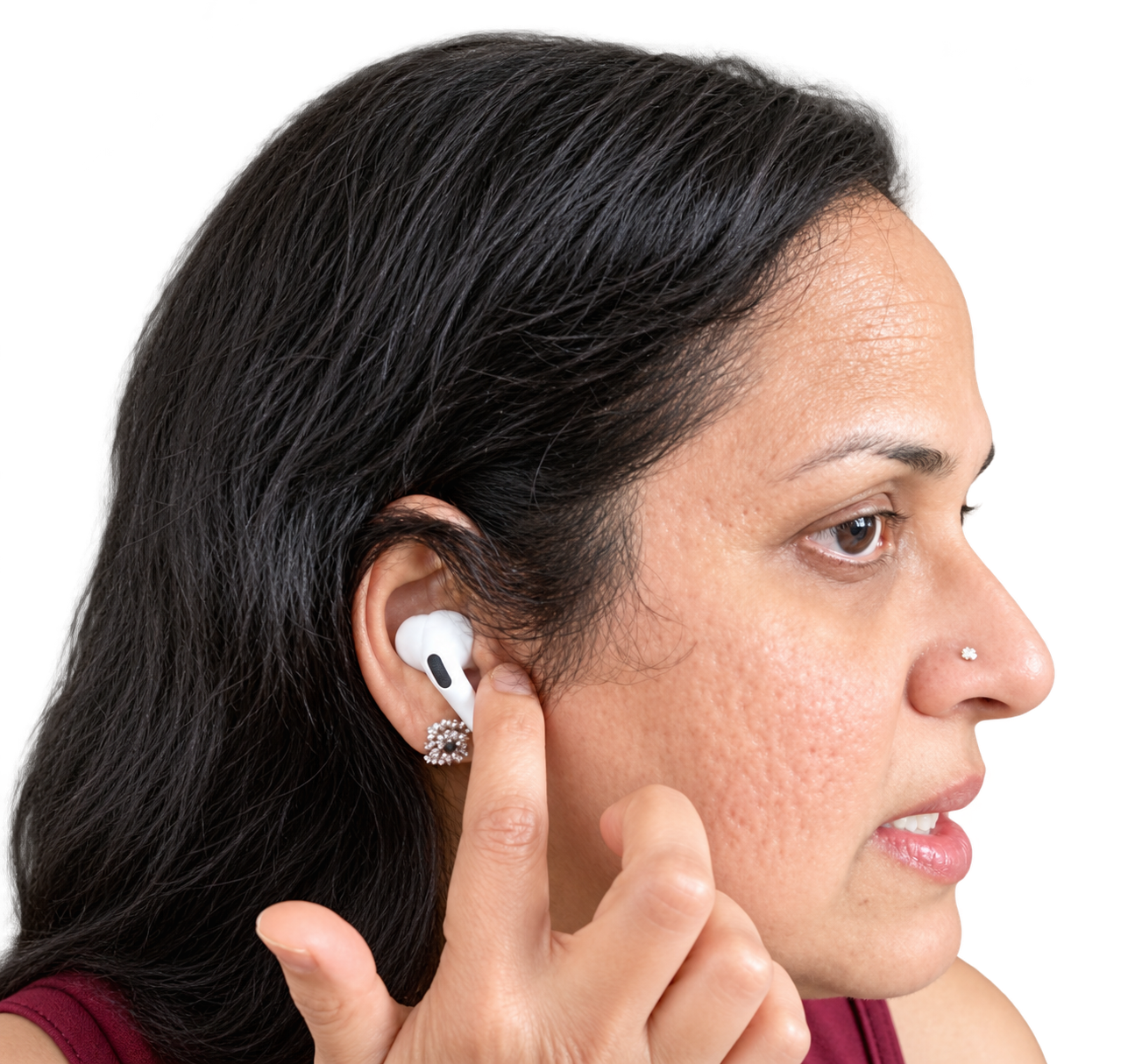
For the second exercise, she explains: “The breath is through the nose in and out, and when you exhale, you hum.”
1. Find the ear contact. The small flap in front of the ear opening is the tragus. Malathi points to it here; your thumbs rest gently there during the exercise.
2. Place your fingers lightly. Rest index fingers between the eyebrows, middle fingers near the inner eye corners, ring fingers beside the nostrils and little fingers beside the mouth. Avoid pressure on your eyeballs or blocking your breathing. Relax your jaw; rest your tongue behind your upper teeth.
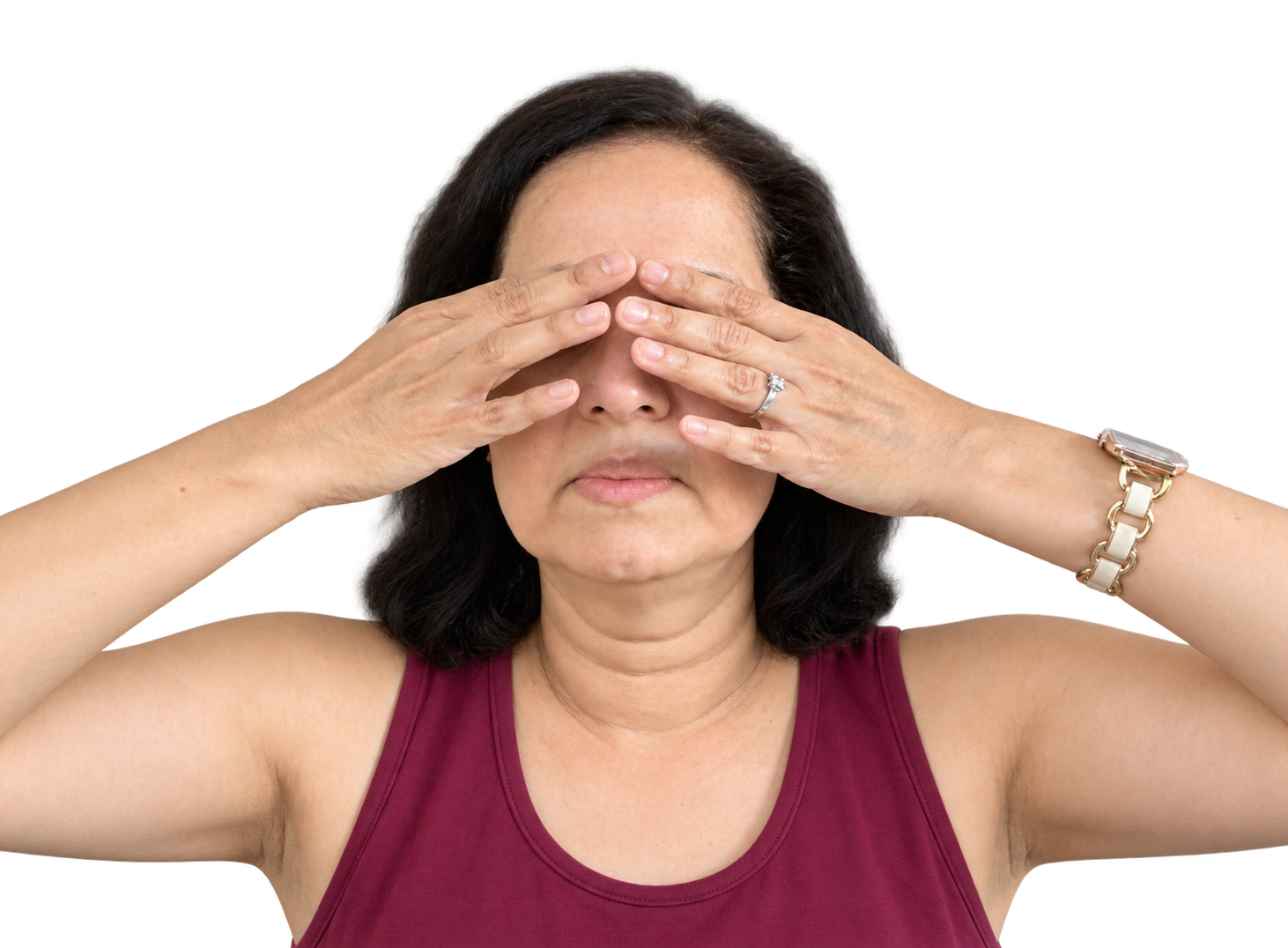
3. Inhale, then hum. Breathe in through your nose. With lips gently closed, exhale through your nose with a soft, steady hum. Let the next inhale come naturally. Malathi suggests three to five rounds.
NCCIH describes preliminary evidence for some breathing approaches for stress, not proof that these two exercises treat hot flashes or insomnia. Stop if you feel dizzy, breathless or more anxious.
The change she hopes someone can notice is specific: “I don't feel as activated and I feel calm, I'm able to think through something. It then puts the control back into my own hands, right?”
These options don't have to be a last resort
Many patients come to me after trying several treatments and still not feeling well. By then, Chinese medicine has become the “alternative,” something to consider only after everything else.
What I value in both Ayurveda and Chinese medicine is the attention to the individual: how someone sleeps, digests, responds to stress and describes what feels wrong. Conventional medicine is essential, but a diagnosis or prescription may not answer every question about why a person still feels unwell. These traditions offer other ways to explore those questions, including gentler options where appropriate.
I want patients to know those options earlier. In my practice, I see the most value in bringing them together with primary care, with practitioners communicating about prescriptions, herbs, acupuncture and what the patient is experiencing. We can keep looking at the whole person, including the symptoms that remain after one treatment helps.